








Classe Descartes
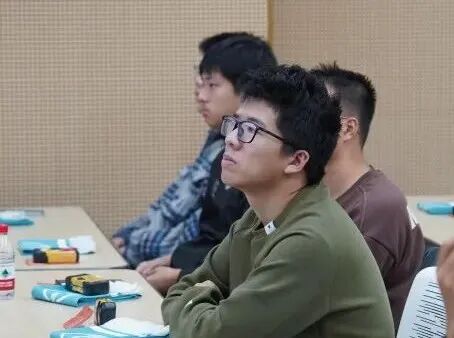
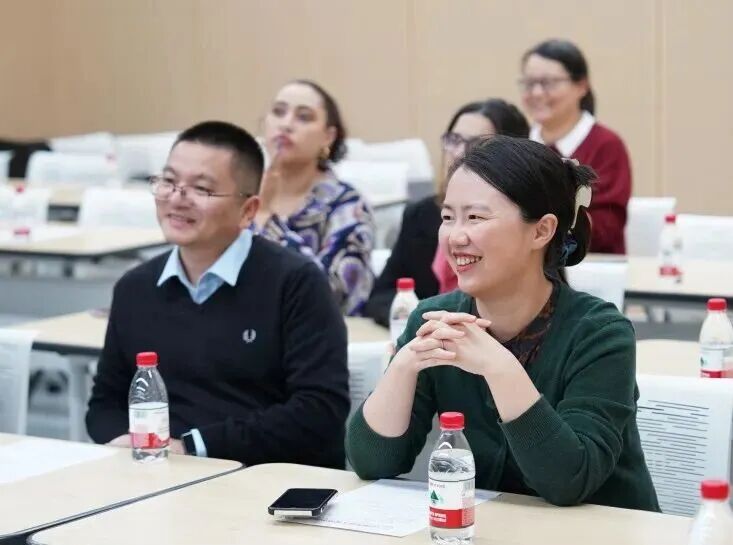
On the afternoon of November 12, the opening ceremony of the first “Descartes Class” of the SJTU Paris Elite Institute of Technology (SPEIT) was successfully held in Lecture Hall 205 of the SPEIT Building. Leaders from Chinese and French partner universities, along with representatives from industry, gathered to witness this new milestone in Sino-French collaboration in engineering education.

Guests attending the ceremony included Liu Weidong, Vice President of Shanghai Jiao Tong University; Estelle Iacona, President of ENSTA, and Sébastien Reymond, Head of International Cooperation; Jean-François Naviner, Head of International Cooperation at Télécom Paris, and Nicolas Prost, Head of International Programs; Marie-Christine Bert, Head of International Cooperation at École des Ponts ParisTech; Chen Huiling, Marketing and Communications Manager of the China Office of Institut Polytechnique de Paris; Zhang Xiaoqun, Deputy Director of the Institute of Natural Sciences at SJTU; Xiong Zhenhua, Secretary of SPEIT; Chen Cailian, Chinese Dean; Zied Moumni, French Dean; Lu Jialiang, Vice Dean; former Deputy Party Secretary Yao Xue; as well as company representatives Li Junxuan and Yin Yue from Dassault Systèmes.
The ceremony was hosted by Lu Jialiang.

1
Sino-French Joint Advancement: Opening a New Chapter
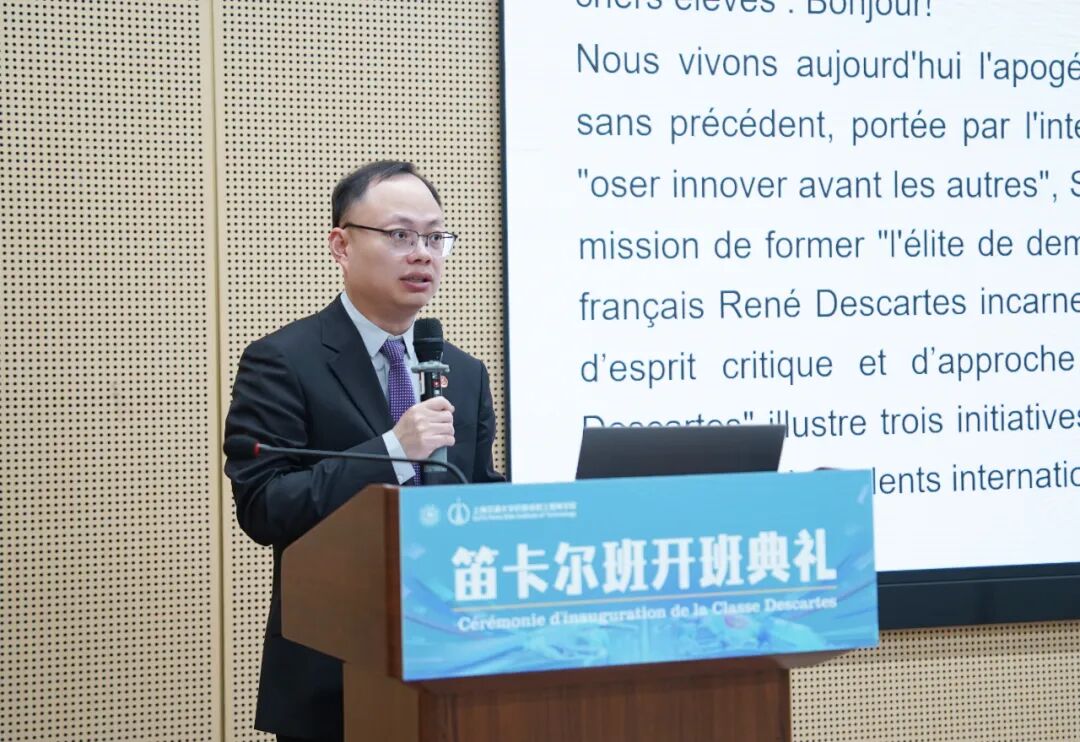
Representing Shanghai Jiao Tong University, Liu Weidong delivered a speech. He noted that the establishment of the “Descartes Class,” built upon SPEIT and integrating the strengths of both Chinese and French educational systems, represents a major exploration of a combined training model featuring mathematics, science, AI, and engineering. The program aims to create a complete innovation pathway—from fundamental theory, to cutting-edge technologies, and finally to engineering practice—cultivating interdisciplinary engineering talents with solid mathematical foundations, AI literacy, global perspectives, and innovative capabilities.
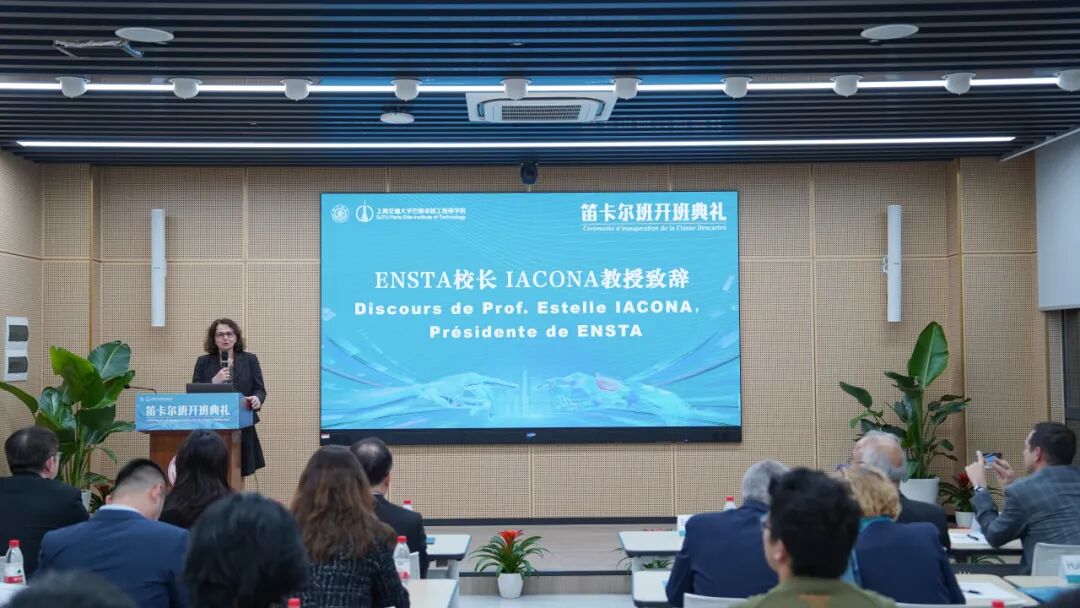
Estelle Iacona, speaking on behalf of the four French partner institutions (École Polytechnique, Mines Paris, ENSTA, Télécom Paris), remarked that the establishment of the “Descartes Class” marks a new phase of Sino-French cooperation and is the result of longstanding joint efforts. The program blends the rigorous structure of French elite education with innovative educational practices in China, balancing theoretical depth with applied breadth within the mathematics + AI + engineering framework. She emphasized that the French side will continue to provide strong academic support, coordinate resources among French engineering schools, and promote international mobility for students, jointly building a new benchmark for Sino-French collaborative education.
2
A Talent-Training Hub Built on “Mathematics + AI + Engineering”
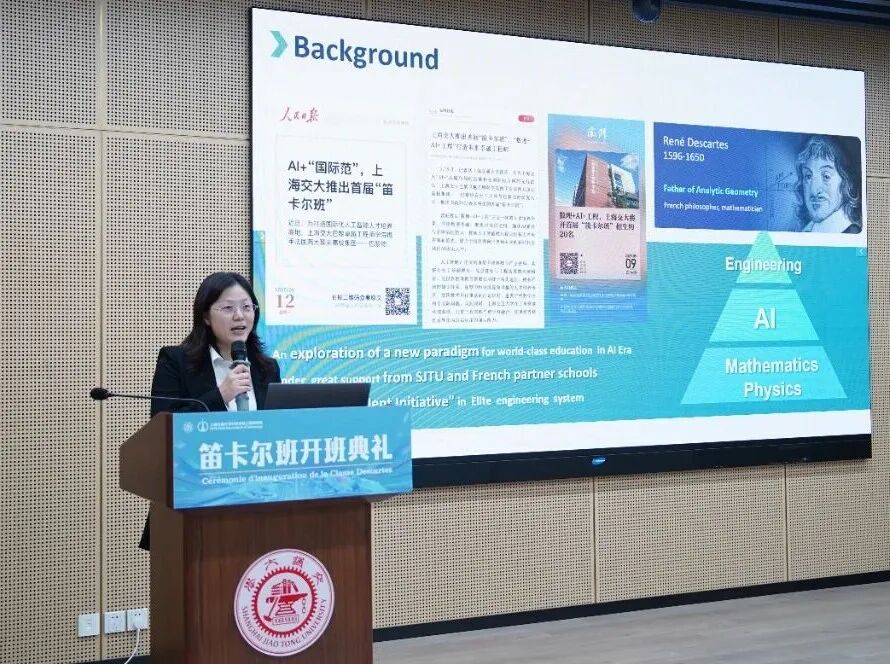
Chen Cailian provided a systematic introduction to the operation and development of the “Descartes Class.” She explained that the class is named after the French philosopher and mathematician René Descartes, symbolizing a return to scientific reasoning and mathematical rigor in the AI era. As an elite program within SPEIT’s “Excellence in Engineering Training System,” it aims to cultivate future academic leaders and top engineering scientists in the age of artificial intelligence.
The curriculum framework strengthens students’ training in fundamental sciences such as mathematics and physics, while deepening theoretical foundations and frontier exploration in AI. Students will receive financial support from the institute for immersive study in France. Guided by the principles of “solid foundations, diverse pathways, global vision, and industry excellence,” SPEIT will progressively introduce academic mentorship, research training in top laboratories, industry internships, and international exchange opportunities to support students in building core competencies.
The first cohort of the “Descartes Class” consists of 22 selected students. The international teaching advisory team includes five faculty members: Célia Carchereux, Marc Becker, Hamza Boukili from the Mathematics Group, and David Delbarre, Shao Lingxuan from the Physics Group. Research mentors come from SPEIT, the Institute of Natural Sciences, the School of Mathematical Sciences, the School of Artificial Intelligence, the School of Computer Science, the School of Automation and Artificial Perception, and the School of Integrated Circuits, guiding students in frontier research areas such as applied mathematics and physics, AI for Science, and AI for Engineering.
3
Appointment Letters and Sashes: Launching a New Journey for the “Descartes Class”
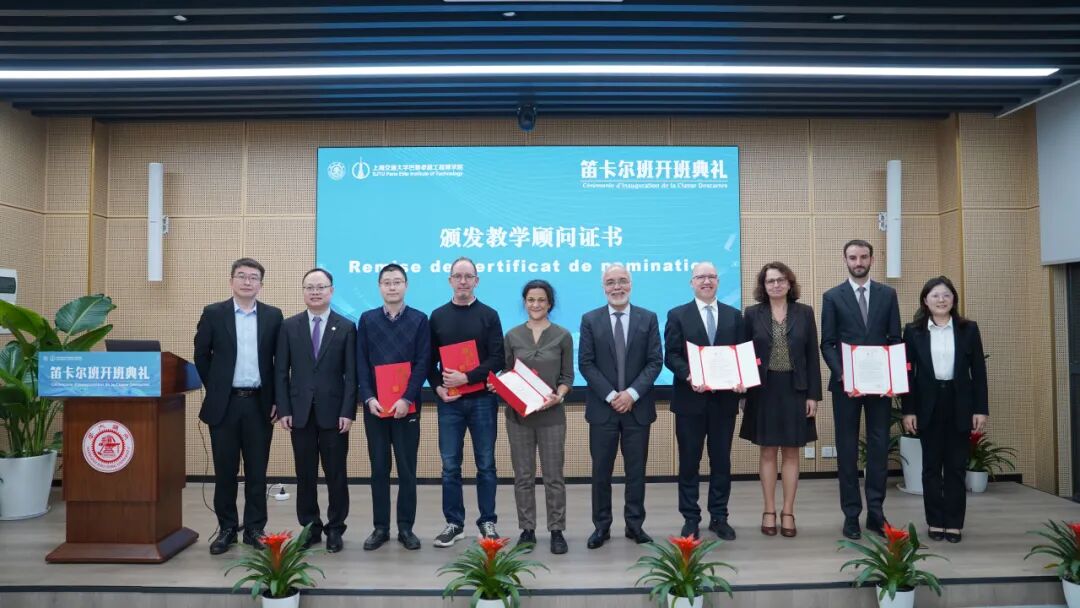
Before all guests, Liu Weidong, Estelle Iacona, Xiong Zhenhua, Chen Cailian, and Zied Moumni jointly presented appointment letters to the five teaching advisors of the “Descartes Class.”
Sashes Presented to the First Cohort of Descartes Class Students
Chinese and French leaders and faculty representatives then presented each student with a personalized sash bearing their name—an exclusive ceremonial gesture marking their formal induction into the inaugural Descartes Class.
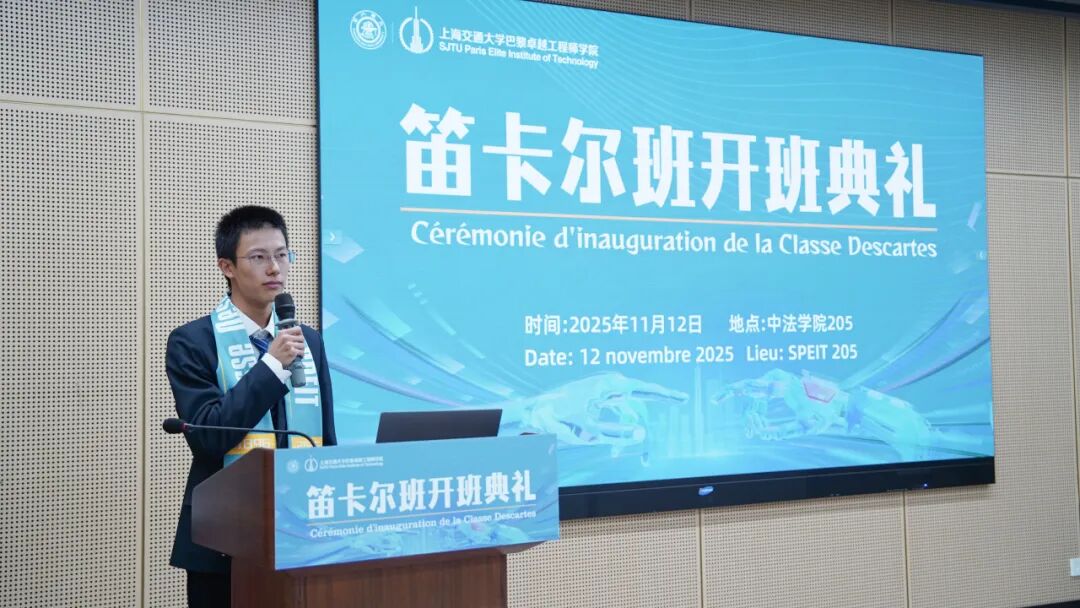
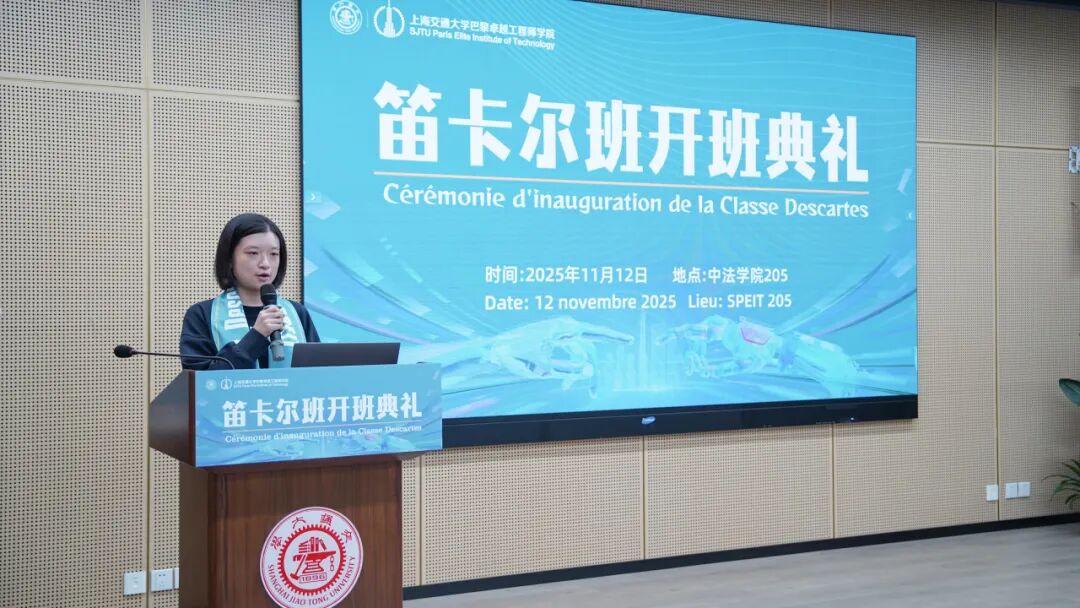
Student representatives Sun Linjie and Wang Enze delivered speeches.
Sun Linjie shared that joining the Descartes Class reflects his aspiration to become a new-generation engineer with both mathematical foundations and AI capabilities, and that he has already felt the inspiration and collective growth brought by this environment.
Wang Enze expressed her excitement about the interdisciplinary mathematics + AI + engineering framework, hoping to grow into an innovative engineer through cross-disciplinary integration.
4
Carrying Forward the Mission: Building a New High Point in Sino-French Education
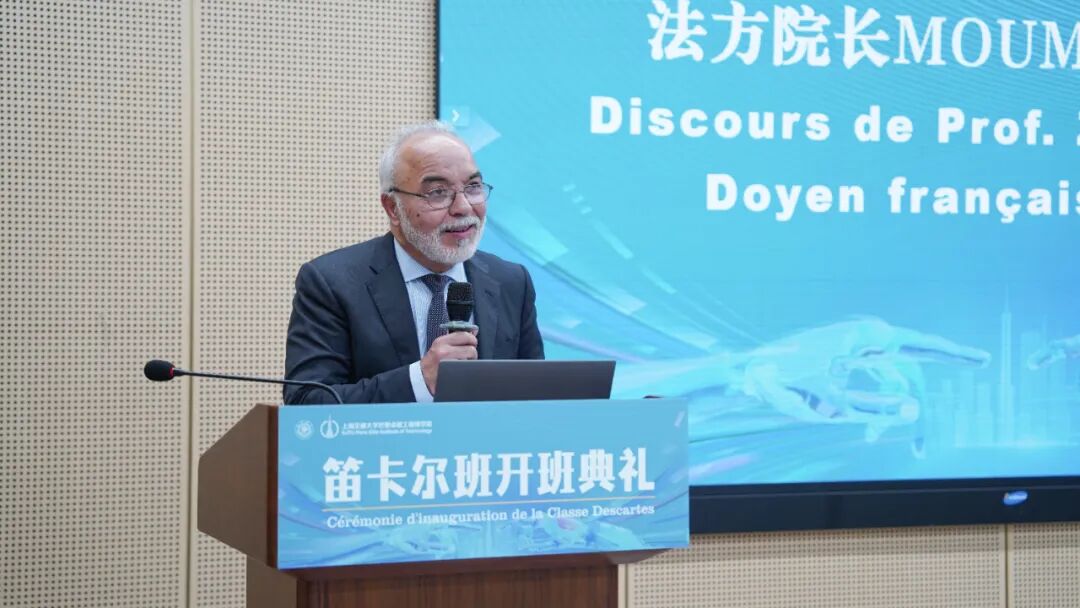
In the closing remarks, Zied Moumni stated that the Descartes Class represents the accumulated achievements of over a decade of Sino-French cooperation and marks a new stage in the institute’s talent-training efforts. He summarized the three core advantages of the program:
1. the deep involvement of French partner schools ensures high academic standards;
2. the curriculum focuses on the frontier intersection of mathematics, physics, and AI, addressing future technological challenges;
3. the first cohort carries a pioneering mission—they are fortunate trailblazers who also shoulder the responsibility of inheriting excellence and fostering innovation.
He emphasized that the establishment of the Descartes Class is a new beginning, and its future will be written jointly by its students and faculty.
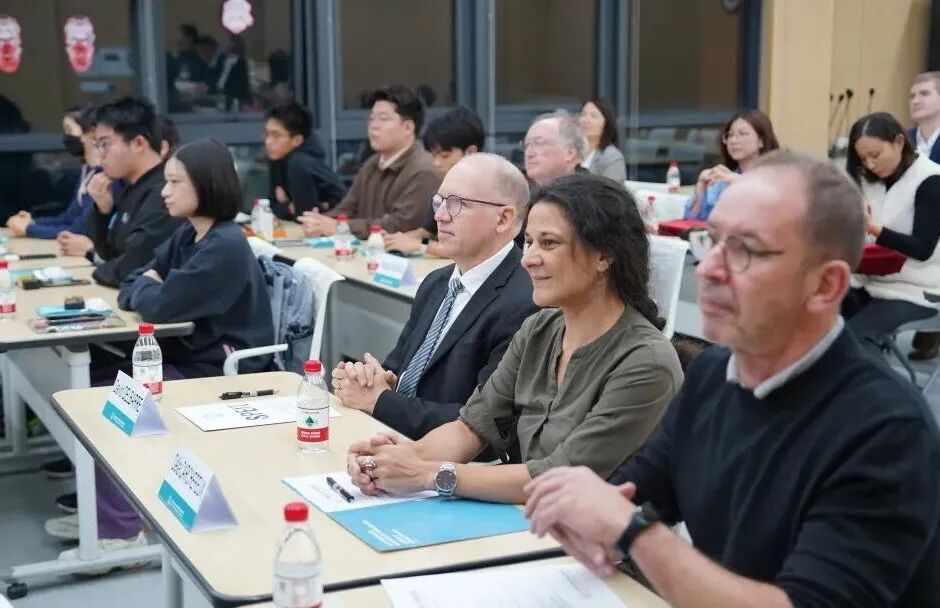
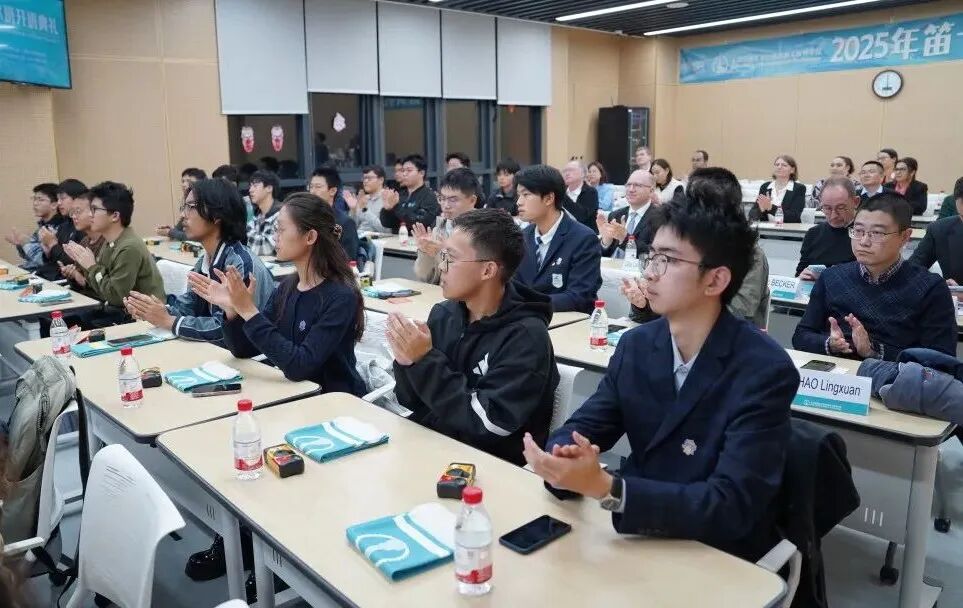
The official launch of the Descartes Class marks a solid step in SPEIT’s journey toward building a world-class international engineering institute. In the future, SPEIT will take this opportunity to deepen Sino-French educational collaboration, build an open, innovative, and excellent engineering-education ecosystem, and provide lasting momentum for cultivating globally competent top young talents in science and technology.