








On October 27, 2025, at noon, SJTU Paris Elite Institute of Technology hosted the fourth roundtable discussion in its “Mutual Learning” series, themed “Physical Artificial Intelligence: Challenges from Perception to Decision-Making and Education in the Real World.”
This edition featured François GOULETTE, Philippe XU from ENSTA, and Guillaume SALHA GALVAN from SPEIT. Together, they engaged in an in-depth exchange on cutting-edge developments in artificial intelligence and innovative approaches to engineering education. Attendees included Dean Zied Moumni, Vice Dean Jialiang Lu, Physics and Chemistry Coordinator David Delbarre, and several faculty members.
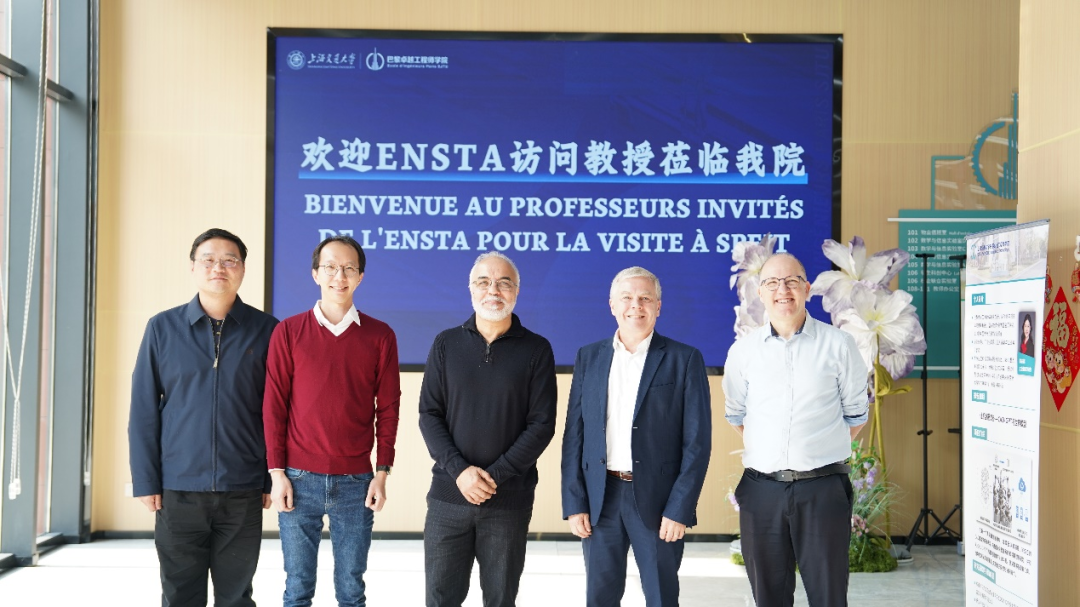
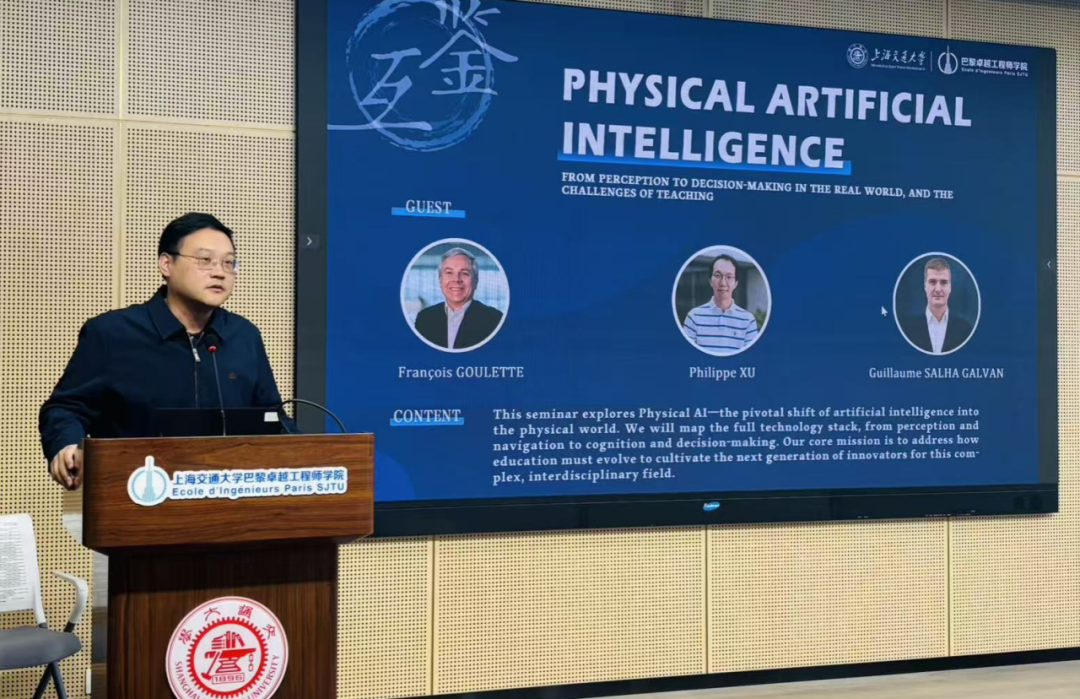
Lu Jialiang chaired the event. He introduced the significance of physical artificial intelligence and its application prospects in the real world, setting the stage for the symposium's theme. He expressed hope that the exchange of academic perspectives between China and France would spark new ideas for technological innovation and talent development in the field of artificial intelligence.
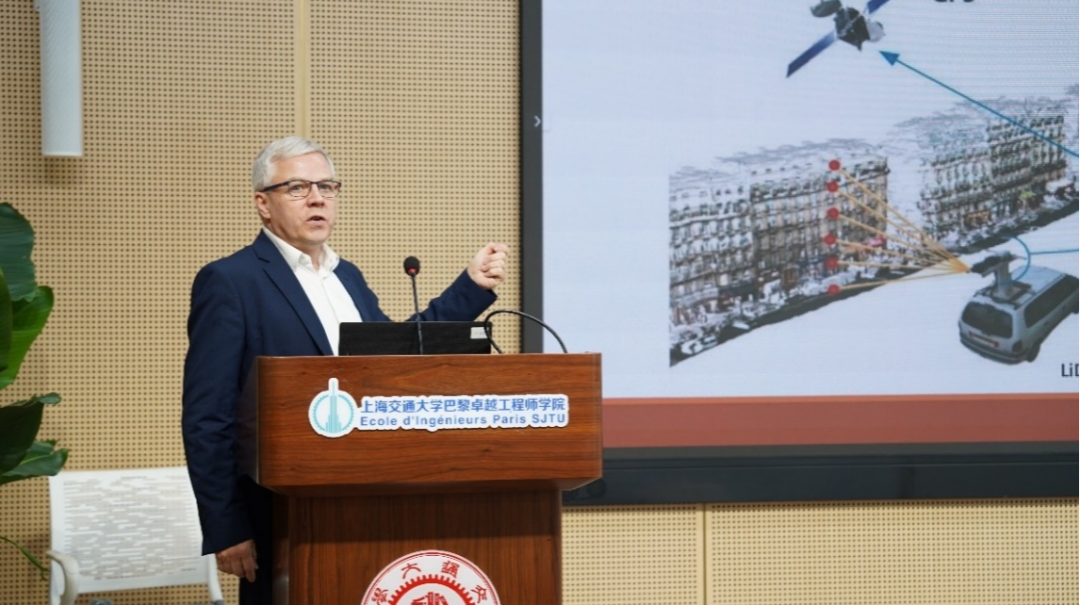
Professor François GOULETTE elaborated on how 3D perception and mapping technologies translate AI capabilities from the virtual world into precise operations in the real world. Through multiple case studies, he demonstrated applications of 3D perception in robot navigation and environmental sensing for autonomous vehicles, underscoring the critical role of high-precision mapping and real-time environmental modeling. He also highlighted challenges in data fusion and processing within complex environments—such as detecting dynamic obstacles and adapting to lighting variations—while sharing his laboratory's latest research findings on these issues.
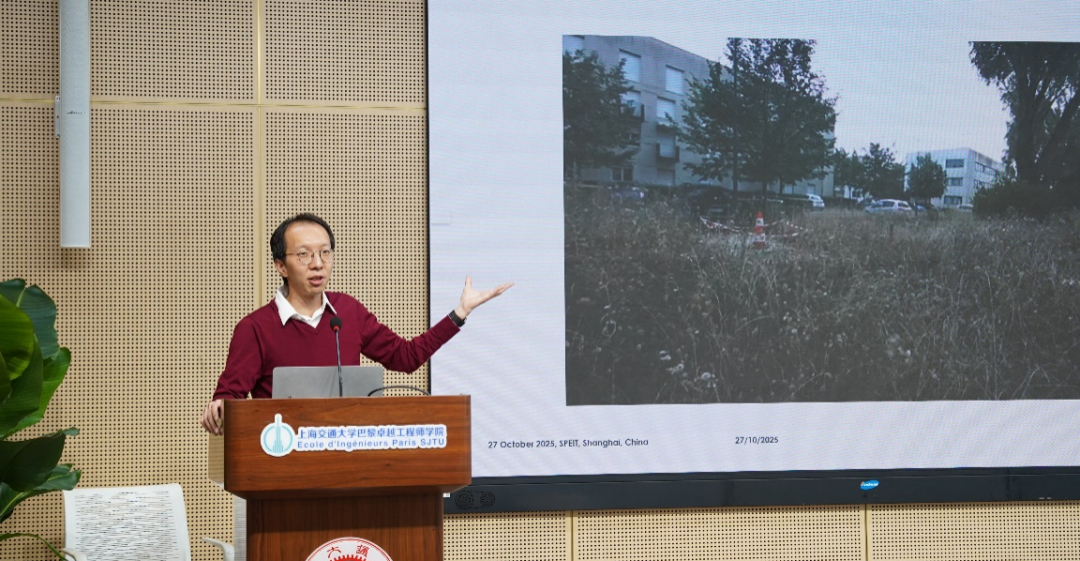
Professor Philippe XU introduced the latest technological breakthroughs in AI for autonomous driving, including deep learning applications in object detection and path planning. He stressed education's pivotal role in cultivating AI talent with interdisciplinary knowledge and innovation capabilities, sharing ENSTA's practical experiences in autonomous driving education—such as project-based learning and industry-academia collaboration models. Additionally, he discussed ethical, legal, and societal acceptance challenges facing autonomous driving technology.
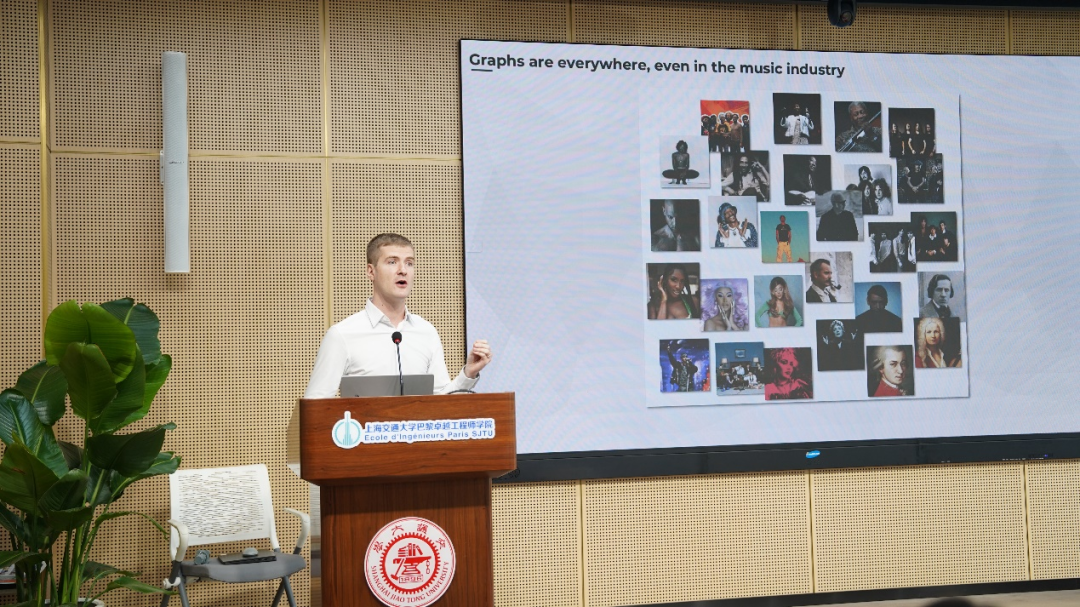
Associate Professor Guillaume SALHA GALVAN delved into the synergistic role of AI, computer vision, and machine learning within autonomous driving systems. Through practical case studies, he demonstrated how these technologies enhance the perception and decision-making capabilities of autonomous vehicles, particularly in complex road conditions. He also emphasized the importance of interdisciplinary education, proposing curriculum designs that integrate knowledge from engineering, computer science, mathematics, and other disciplines to cultivate future AI talent with comprehensive skills and innovative thinking.
During the Q&A session, attendees posed numerous targeted and forward-looking questions. These included: how to effectively address data fusion and processing challenges to ensure efficient system decision-making; how to design interdisciplinary curricula to meet the demand for multi-disciplinary talent in AI; and how to enhance the perception reliability and decision-making safety of AI systems in complex road conditions. The experts provided detailed and in-depth answers, offering valuable insights and recommendations to participants.
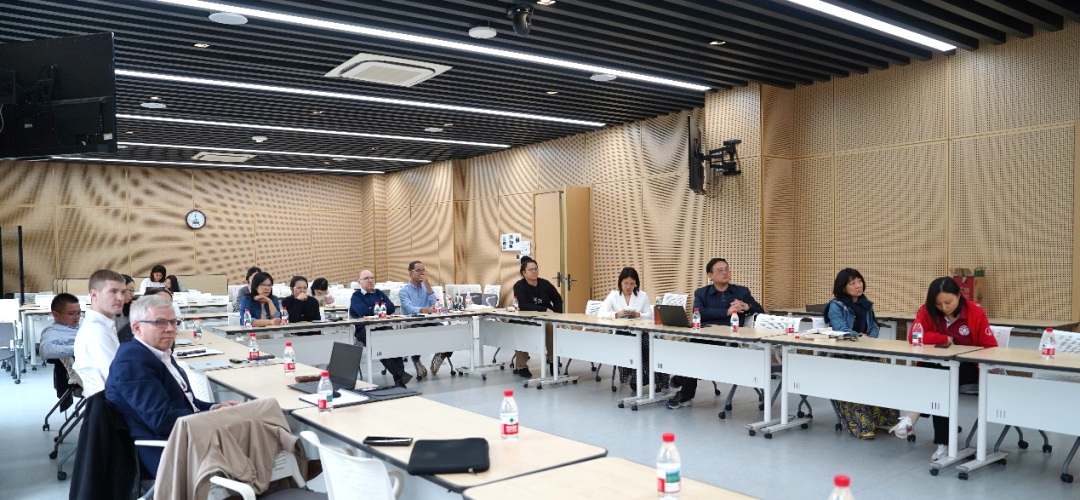
This event established a platform for in-depth exchanges between Chinese and French experts, further facilitating mutual learning of experiences in AI and educational innovation between scholars from both nations. Attendees expressed their hope to leverage the platform of SPEIT to deepen future collaboration in AI, drive innovation and application of AI technologies, and contribute to cultivating more outstanding AI talents with international perspectives.