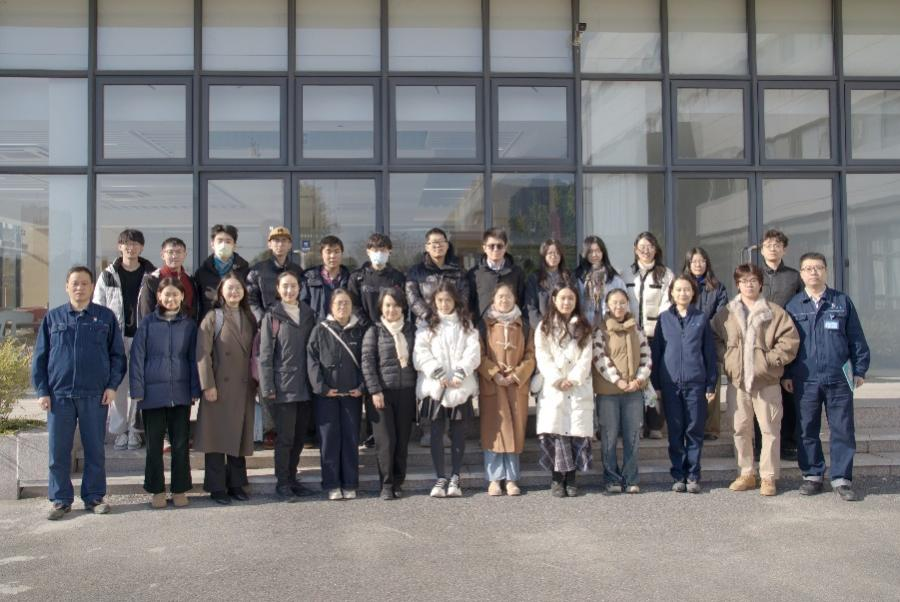







On December 26, teachers and students of the Engineering Thermodynamics course at SJTU Paris Elite Institute of Technology (SPEIT) visited the energy project sites of China Huadian Corporation in Shanghai, conducting a field trip closely integrating classroom teaching with engineering practice. Abstract formulas from the classroom converged with real-world scenarios of national energy development, providing a vivid opportunity for students to understand the practical value of professional knowledge and expand their engineering perspective.
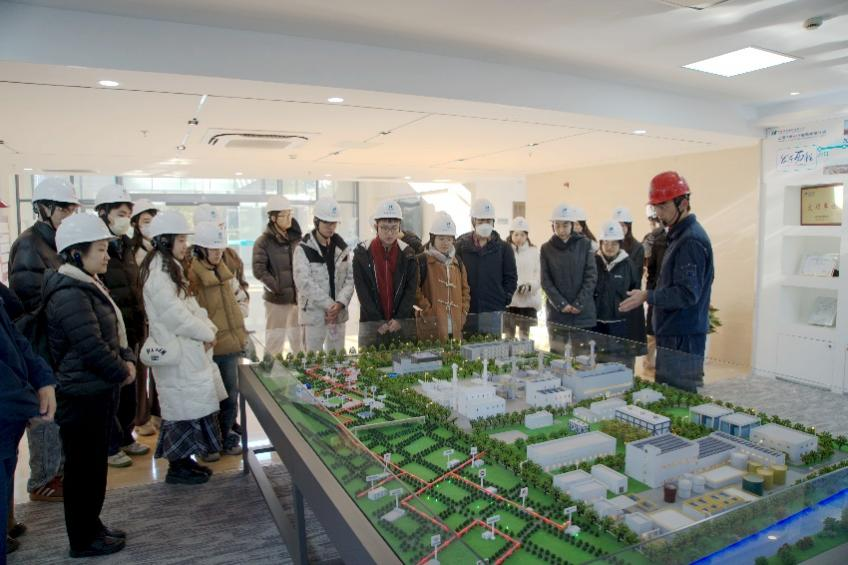
China Huadian Minhang Energy Co., Ltd.

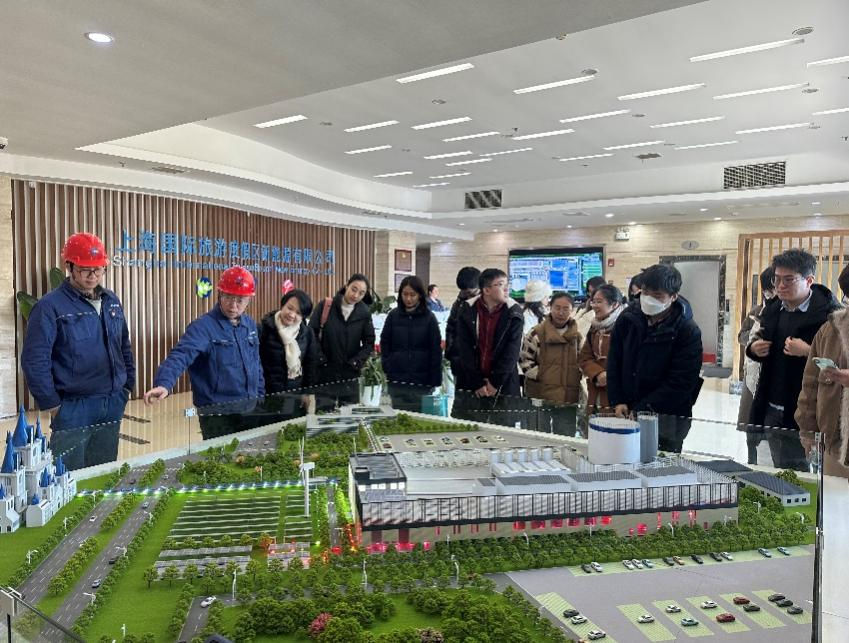
Shanghai International Tourism Resort New Energy Co., Ltd.
This visit focused on two representative distributed energy projects of China Huadian Shanghai Branch. The first stop was China Huadian Minhang Energy Co., Ltd. Through a gas-steam combined cycle unit, the project realizes the cogeneration of heat, electricity, and cooling. Since its commissioning, it has stably supplied energy to surrounding industrial zones and public facilities, effectively replacing more than 60 scattered boilers in the region. While improving energy utilization efficiency, it has also significantly reduced environmental load.
Subsequently, teachers and students went to Shanghai International Tourism Resort New Energy Co., Ltd. With high-efficiency gas internal combustion engines as the core, the energy station integrates distributed photovoltaic power, energy storage, and an intelligent energy management system, enabling flexible allocation of multiple energy forms such as cooling, heat, and electricity according to load changes. As the first energy station invested, constructed, and operated by a third party among global Disney projects, it has become a model of "integrating Disney’s global standards with local best practices" through its practices in safety standards, system redundancy, and operational reliability, presenting students with engineering solutions in international application scenarios.
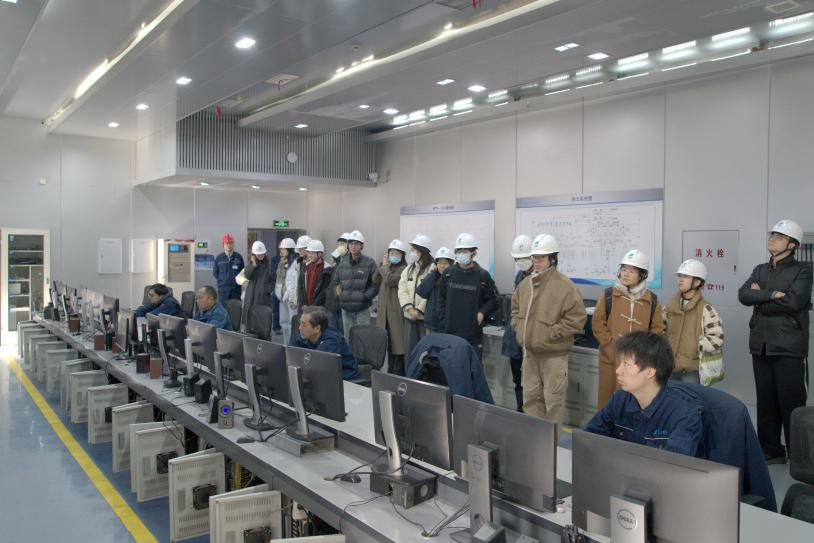
Through the comparison of the two projects, students gained a deeper understanding of the engineering logic that "there is no best technology, only the most suitable solution for the scenario." The knowledge taught in class is no longer confined to calculations and derivations, but corresponds to system selections based on different load characteristics, energy demand, and operational goals. There is no one-size-fits-all optimal solution in engineering—only rational decision-making through continuous trade-offs under constraints. This understanding was fully verified on site.
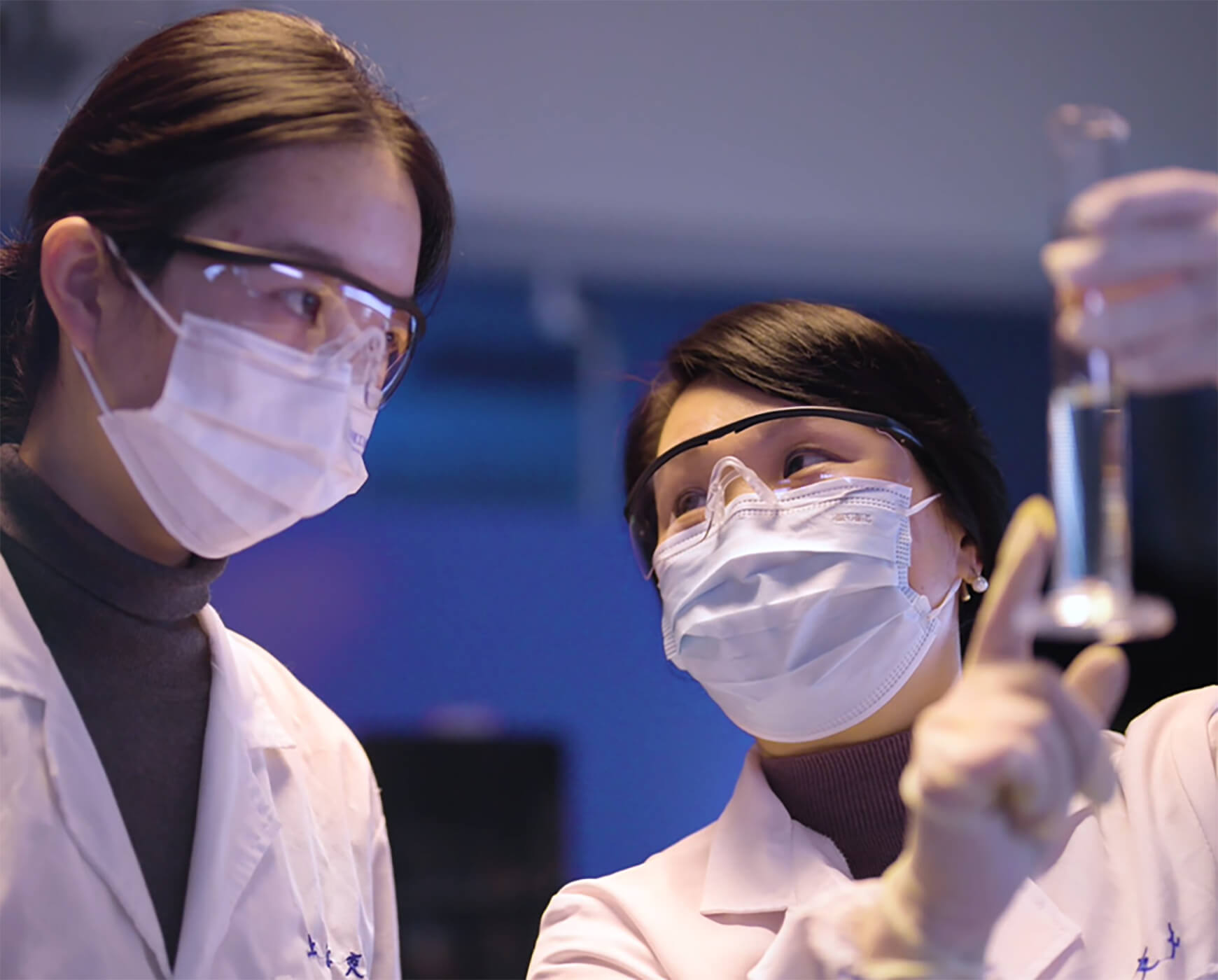
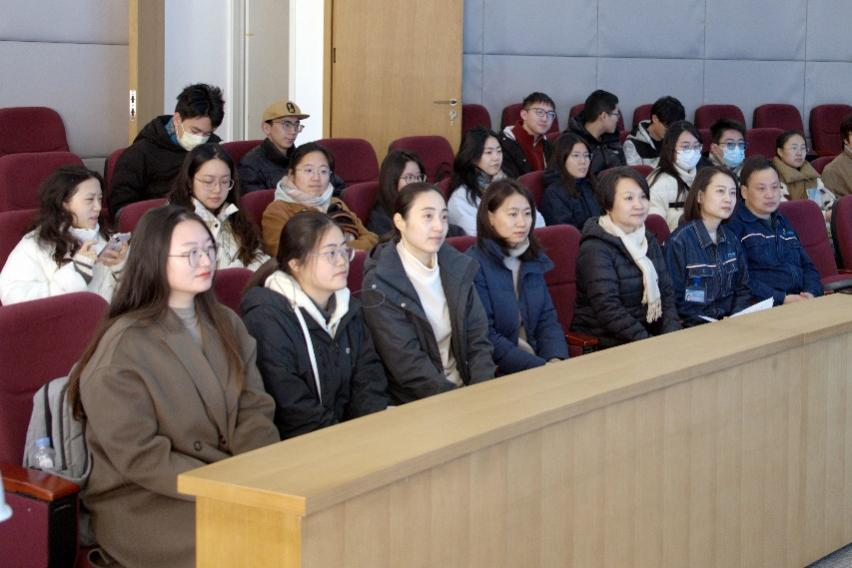
During the visit, corporate technical personnel gave detailed explanations on issues such as working fluid selection, heat exchanger design, pipe network layout, and intelligent control systems. This not only demonstrated the in-depth integration of information technology and energy engineering but also made students realize that modern energy systems have long transcended the scope of a single discipline, placing higher requirements on engineers' comprehensive capabilities.
A more profound touch came from direct exchanges with industry realities. Energy security and independent innovation are no longer abstract concepts but become era-defining topics for young engineering talents. Meanwhile, the sense of responsibility of the two projects in ensuring urban operation and serving major public needs made students personally feel the social value and people's livelihood significance borne by energy engineering. Energy supply is not only a technical issue but also a social commitment to safeguarding people's daily life and supporting economic and social operation—this understanding was deeply etched in every student's mind.
This visit was not only an extension of teaching but also a simultaneous shaping of professional cognition and sense of mission. Teachers and students set out with questions and returned with gains, achieving a profound cognitive elevation in multiple dimensions such as knowledge, skills, family and country feelings, and sense of responsibility. Making formulas grounded and knowledge rooted, this "walking Engineering Thermodynamics class" sowed seeds in students' hearts of integrating personal ideals into the cause of building an energy-powerful country, helping them complete the key leap from knowledge accumulation to mission recognition.