







Editor's Note
The way to lasting benefit lies in moving forward with the times. Upholding the educational philosophy of “Strong Foundations, Diverse Development, Global Vision, and Industry Leadership,” the SJTU Paris Elite Institute of Technology has remained committed to cultivating elite engineers with both national commitment and global competence.
As the graduation season of the Class of 2026 arrives as scheduled, the Institute proudly launches the Graduate Stories series, documenting students’ journeys from the Minhang Campus across geographical and cultural boundaries—into the frontiers of scientific research, onto the stages of international exchange, and into the front lines of industrial practice—where they explore the beauty of engineering and shoulder the responsibilities of their era.
✦ Graduate Profile
Profile
✦

Peng Boyang
Paris School of Engineering, Shanghai Jiao Tong University
Outstanding Graduate of Shanghai (Class of 2026)
Major: Mechanical Engineering
Research Directions: Piezoelectric-driven vibration-induced flow mechanisms; Solid Mechanics
Exchange Experience: Dual-degree exchange at École Polytechnique (2.5 years)
Postgraduate Destination: Pursuing a Ph.D. at the School of Mechanical Engineering, Shanghai Jiao Tong University
Honors Received: Outstanding Graduate of Shanghai; First-Class Academic Scholarship (Master’s); SPEIT Second-Class Academic Scholarship; ARDIAN Progress Award
✦ Growth Story
Story
✦
01
An Early Cross-Cultural Academic Experience
/ SPEITERS
Like many students, Peng Boyang entered SJTU with aspirations for the future and a deep thirst for knowledge. If there is something distinctive about his growth path, it may stem from an overseas experience that began early—and from the seeds it planted in his academic life, whose influence only gradually became apparent later on.
In the second semester of his junior year, while many classmates were focusing on deepening their professional studies or preparing for domestic postgraduate paths, Peng Boyang was selected for the dual-degree program with the university’s French partner, École Polytechnique. This marked the early arrival of a two-and-a-half-year immersive cross-cultural academic journey.
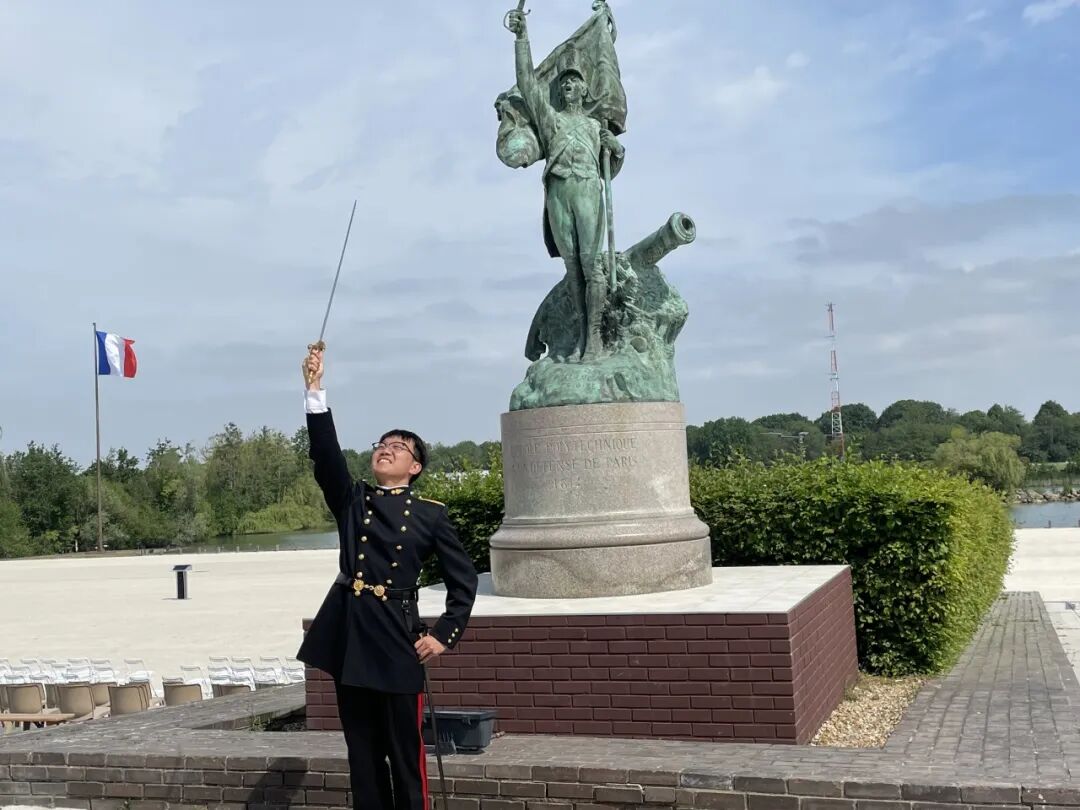
▲ 彭泊洋于巴黎综合理工学院授剑仪式后
In Paris, he encountered an environment with markedly different teaching philosophies and learning models. Classroom discussions often had no standard answers. Professors preferred students who raised well-grounded questions—or even redefined the problems themselves. At first, this unfamiliarity brought profound discomfort. The learning approach he had known—efficiently absorbing knowledge and solving problems—seemed to meet its limits. During that period, he moved from confidence to confusion, and eventually to calm observation and reflection.
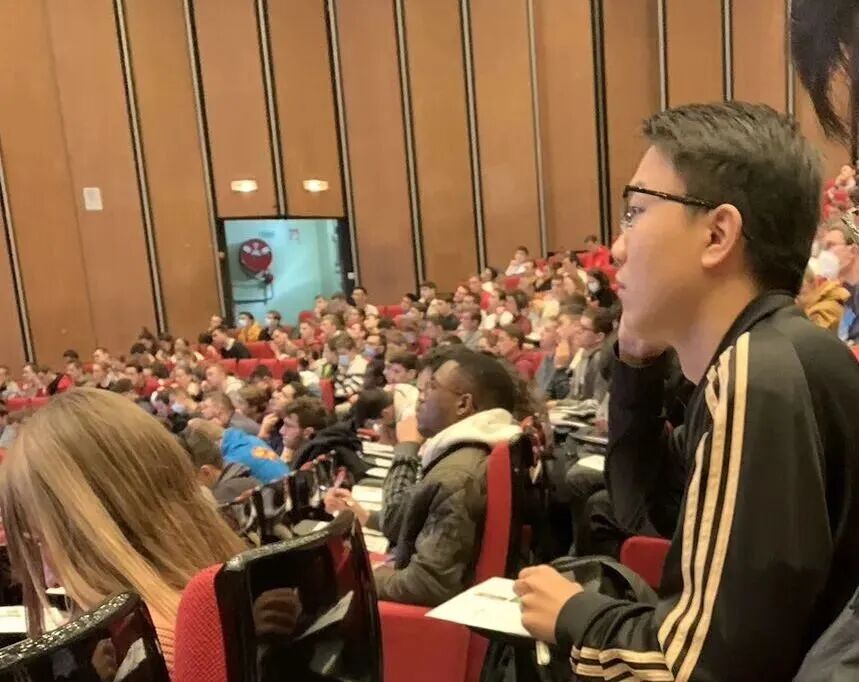
▲ 彭泊洋于巴黎综合理工学院课堂中
Within the relatively self-directed academic rhythm in France, Peng found ample time at his disposal. He gradually realized that beyond technical mastery lay a broader academic vision and the joy of probing the essence of things. He began to appreciate a state that did not rush toward quick success, that allowed space for wandering and deep thought. After two and a half years abroad, he returned with a rare sense of composure—especially precious in a fast-paced era. Though his technical progress in a specific direction may have temporarily lagged behind some peers in China, this seemingly “delayed” period quietly forged his mindset: more independent, more reflective, and more at ease with uncertainty in the exploratory process.

▲ 彭泊洋在实验室中制作样品研究空气动力学问题
02
Becoming an Explorer with a Map in Mind SPEITERS
Upon returning to the familiar yet subtly changed campus of Shanghai Jiao Tong University, Peng Boyang joined the State Key Laboratory of Mechanical Systems and Vibration. In terms of timing, his deep involvement in research as a postgraduate did not start the earliest. Some lab mates had accumulated longer research experience in related areas. Yet he showed no anxiety about catching up.
Thanks to the period of reflection in Paris, he approached research like an explorer with a map in mind. Instead of plunging immediately into technical details, he spent considerable time systematically understanding the lab’s overall structure, the focus of each research group, and engaging in deep dialogue with his own interests. What he sought was not merely a promising topic, but one that resonated with his reshaped academic values.
In this proactive search, the field of chip thermal management entered his view and quickly captured his full attention. The topic has a clear and urgent engineering background—addressing the thermal bottleneck faced by future high-power chips—giving it solid practical significance. At the same time, the underlying fundamental questions in microscale fluid dynamics and piezoelectric material-structure coupling involve complex mechanisms and unknown challenges. These precisely echoed his deeper desire to understand not just “how to do,” but “why.” Choosing this direction was not passively accepting a task, but actively claiming a field worth cultivating—a deliberate intellectual commitment.
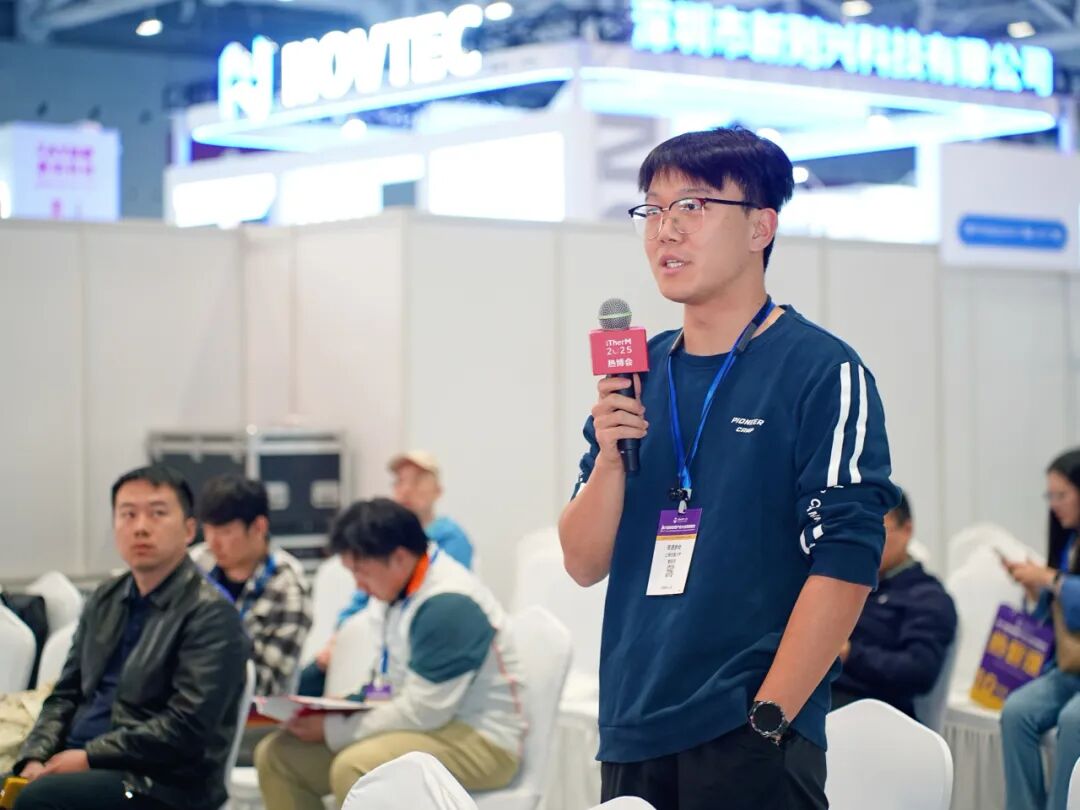
▲ 彭泊洋参加热管理大会并在会议上提问
Once the direction was set, the steady accumulation from his time abroad quickly transformed into momentum. The strong self-learning ability he developed in France, his habit of critically reading literature, and his methodological approach to analyzing complex systems enabled him to penetrate vast background information and grasp the core thread of the problem efficiently. The calmness and patience he cultivated abroad became invaluable when facing inevitable repetitions and setbacks in early-stage research. He analyzed each unsatisfactory experimental result carefully, extracting meaningful clues. With inner steadiness and focus, he achieved systematic progress despite a seemingly later start, yielding fruitful outcomes in both academic papers and patent applications.
03
Building the Confidence to Become an Outstanding Engineer Through Industry Practice
/ SPEITERS
An excellent modern engineering talent should not confine their vision to laboratory instruments. Peng Boyang clearly understood that transforming theoretical breakthroughs into practical value requires a deep grasp of industrial needs and logic. Through the college’s engineering training program, he completed two distinct yet equally valuable internships—at Commercial Aircraft Corporation of China and at the Shanghai Gigafactory of Tesla, Inc..
His internship at COMAC allowed him to view technological innovation through the lenses of new material policy research and intellectual property management. He realized that for advanced technologies to move beyond the lab, they must overcome not only research bottlenecks but also non-technical barriers such as regulations, certification standards, and patent strategies. He developed a more comprehensive understanding of the “innovation ecosystem.”
In contrast, his internship at Tesla’s Shanghai Gigafactory immersed him in an engineering environment driven by extreme efficiency and rapid iteration. In structural simulation and optimization projects, he had to quickly translate theoretical knowledge into practical tools for solving real design problems—making decisions under constraints of performance, cost, and safety. This experience significantly strengthened his engineering mindset and his ability to ground abstract knowledge in real-world applications. Together, these two internships—one slower and macro-oriented, the other fast-paced and concrete—formed a complete cognitive and practical loop in his development.
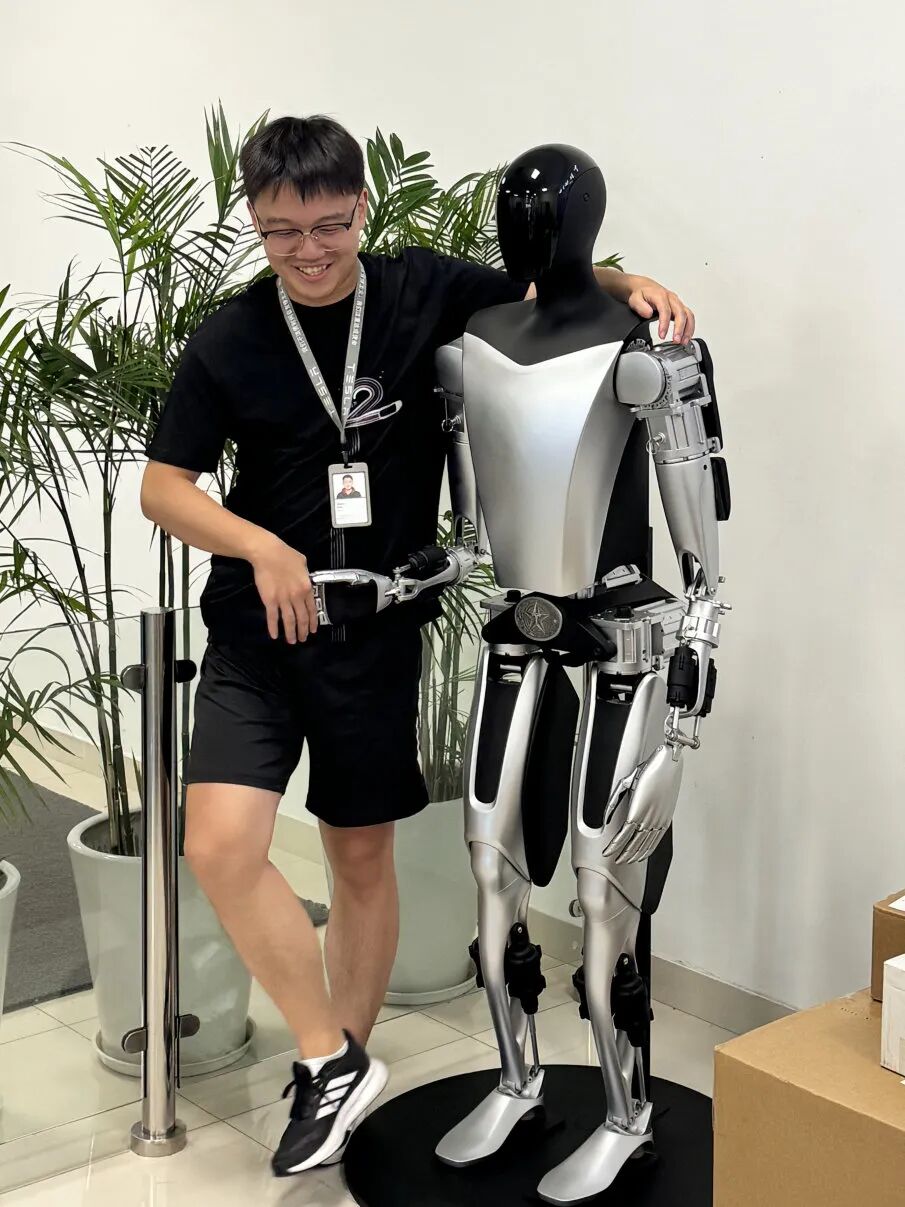
▲ 彭泊洋在上海特斯拉超级工厂中与特斯拉Optimus机器人模型合影
Looking back on Peng Boyang’s journey from undergraduate to master’s studies, a clear thread emerges. An early immersive overseas academic experience may have slowed his research rhythm compared to domestic peers, but it provided profound intellectual initiation. This cross-cultural perspective and the composure forged abroad enabled him to avoid blind conformity and anxiety during postgraduate study, make firm directional choices, and ultimately demonstrate steady yet resilient momentum in research practice. Upon completing his master’s degree, he chose to pursue a Ph.D. at SJTU. Having found a field that sustains his long-term passion, he now seeks deeper and more systematic exploration.
Peng Boyang’s story may lack dramatic twists. It resembles a river that, after merging with a tributary, changes its internal speed and composition—flowing more steadily and clearly toward the distance it chooses. It tells of a young person who continuously reflects, absorbs, and internalizes diverse experiences, eventually integrating them into a unique and solid inner force that supports forward movement. It reminds us that the impact of education may emerge with delay, and that true growth often lies in how we weave seemingly scattered experiences into a firm and distinctive strength that propels us onward.
More stories of outstanding young engineers are on the way.