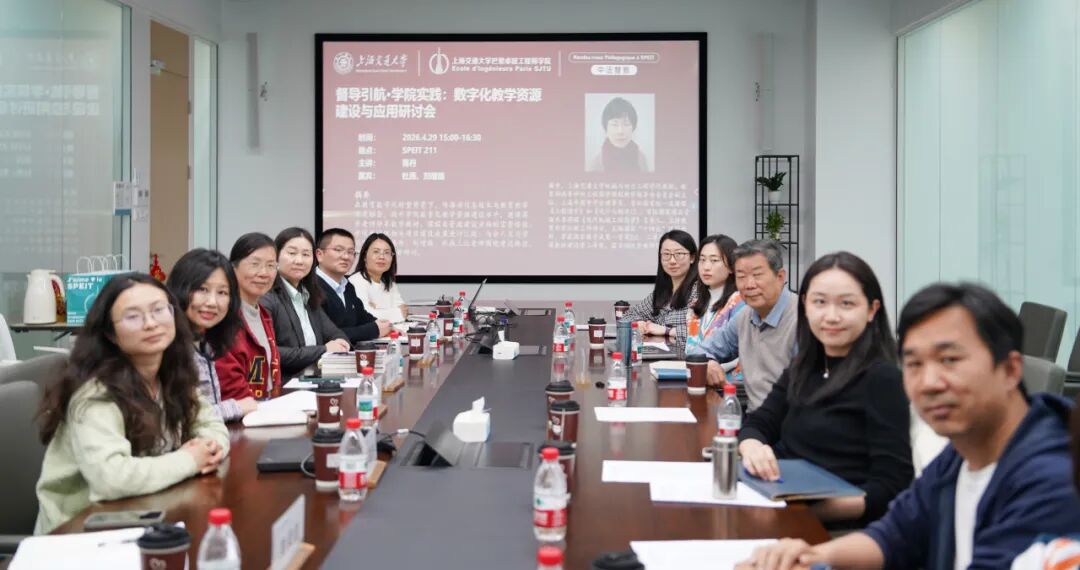







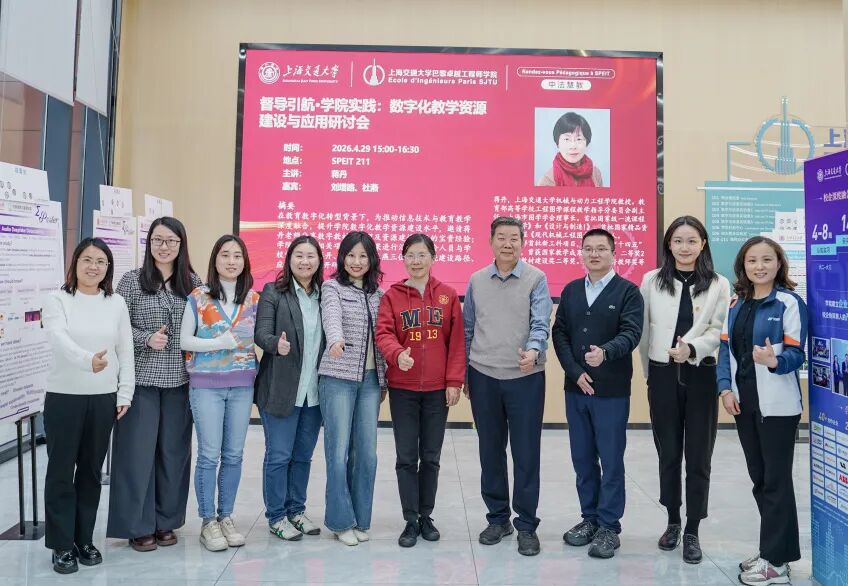
Professor Jiang Dan from the School of Mechanical and Energy Engineering was invited to deliver the keynote presentation. The event was attended by Du Yan, University Teaching Supervisor, and Liu Zenglu, University Teaching Supervisor and Director of the School’s Teaching Supervision Committee. Also present were Lu Jialiang, Vice Dean of SPEIT; Yuan Yijia, Director of the School Division of the Center for Teaching Development; as well as key faculty representatives and staff from the Academic Affairs Office. Participants engaged in in-depth discussions on the construction and application of digital teaching resources, providing valuable insights and practical references for their high-quality development and implementation.
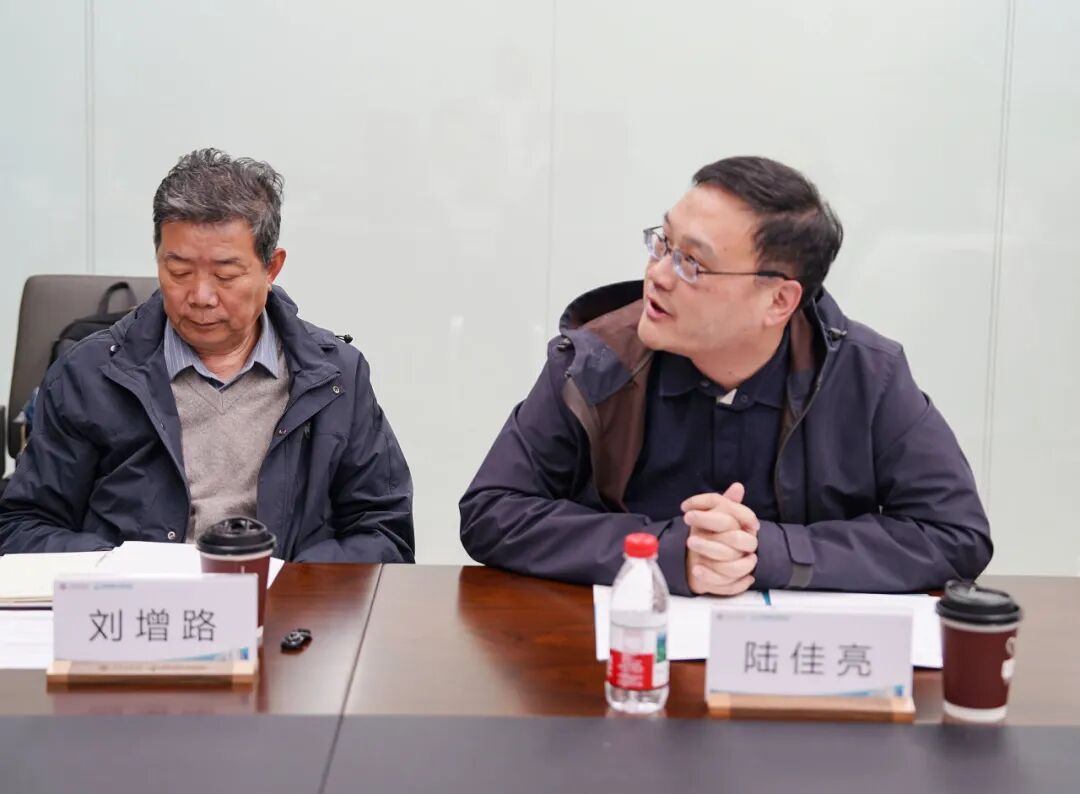
At the opening session, Vice Dean Lu Jialiang delivered a welcome address. He warmly welcomed Professor Jiang and the supervisors, and expressed sincere appreciation for their continued support of the school. Lu emphasized that SPEIT adheres to the educational philosophy of “strong foundations, diverse development, global vision, and industry leadership,” with the goal of cultivating innovative engineering talents and future industry leaders with global competence. In the context of the digital transformation of education, the school continues to explore new approaches to integrating digital technologies into teaching, actively advancing AI-enabled education, and striving to develop distinctive strengths in digital teaching resource development.
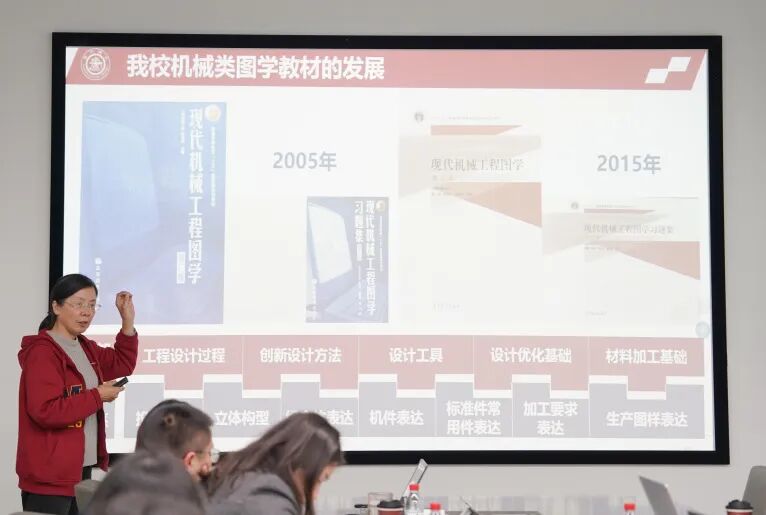
Professor Jiang then shared her experience in the development of digital textbooks, courses, and teaching resources. From early teaching methods based on physical instructional aids, to the emergence of high-quality courses, MOOCs, and virtual simulations, and further to the transformative impact of AI technologies, the core concept of digital education has evolved from a “teacher-centered” to a “student-centered” approach. Through practical case studies, she demonstrated how knowledge graphs can be used to design courses with a holistic and systematic perspective, providing a clear pathway for the integration and effective utilization of digital teaching resources.
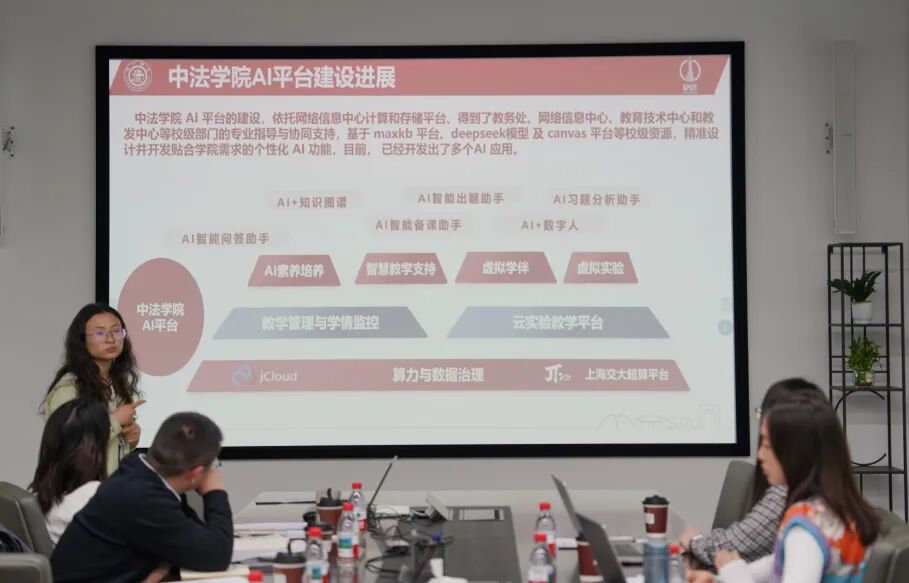
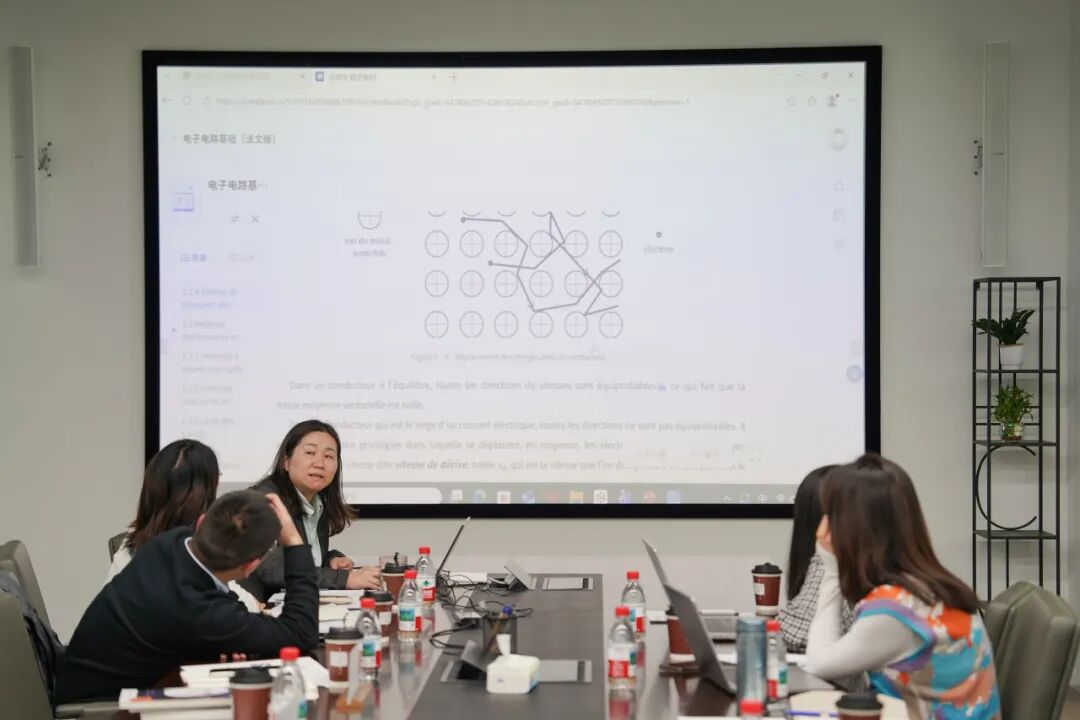
Mao Yunjie, IT specialist from the school’s laboratory support team, introduced the progress of the school’s AI platform. Developed with support from university-level resources, the platform offers a range of customized functions, including an AI Q&A Assistant, AI Exercise Analysis Assistant, AI Lesson Preparation Assistant, AI Test Generation Assistant, and AI-powered knowledge graph applications. These tools enhance the teaching and learning experience across the full cycle of “teaching, learning, practice, and assessment,” and provide strong technical support for the implementation of digital education reforms. Yuan Yijia, head of the physics teaching materials group, presented the development of French-language digital physics textbooks. The school is progressively integrating the characteristics of Sino-French engineering education into its textbook system, while exploring cross-platform collaboration to promote the integration of course development and digital textbooks, thereby improving both dissemination and interactivity.
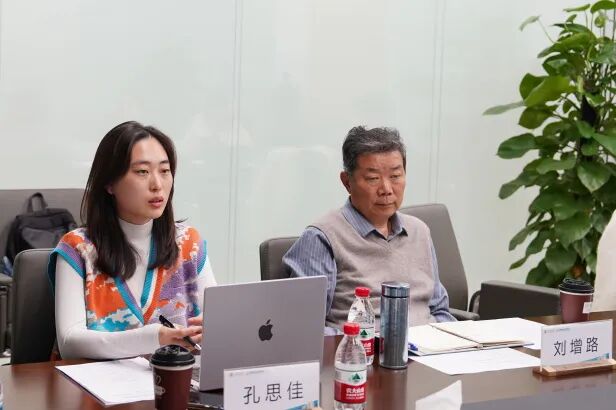
During the discussion session, experts and faculty members exchanged views on topics including the integrated development of courses and teaching materials, the application of AI in classroom teaching, differentiated instruction, and the development of teaching resources. Experts emphasized that courses and textbooks should be developed as an integrated whole to ensure the coherence of the teaching system. Supporting materials such as slides, exercises, and videos should be closely aligned with textbooks, enabling immediate classroom use with minimal adaptation. Regarding AI, participants noted that it cannot replace face-to-face interaction between teachers and students; instead, classroom teaching should focus on guiding students’ thinking and fostering creativity.
The school will take this seminar as a new starting point to systematically review its approaches and achievements in digital teaching resource development, and to further promote the deep integration of digital technologies into Sino-French cooperative education. Future efforts will focus on “integrated course and textbook development and AI-enabled precision teaching,” with continued advancement in digital textbooks, knowledge graphs, and intelligent learning tools. These initiatives aim to stimulate innovation in education and to establish a model of digital teaching resource development with distinctive Sino-French characteristics, injecting new momentum into the high-quality development of cooperative education.