










On April 25, the research team led by Professor Zhong Shengyi and Associate Researcher Li Yang from the SJTU Paris Elite Institute of Technology (SPEIT) achieved important progress in the study of high-strength and high-toughness additively manufactured aluminum alloys. The related work, entitled “Strong 3D-printed aluminium reinforced with ductile-transformable eutectic nano-skeleton,” was published in Nature Communications. Associate Researcher Li Yang and doctoral student Chen Tingting are co-first authors, while Professor Zhong Shengyi and Professor Chen Zhe are co-corresponding authors.
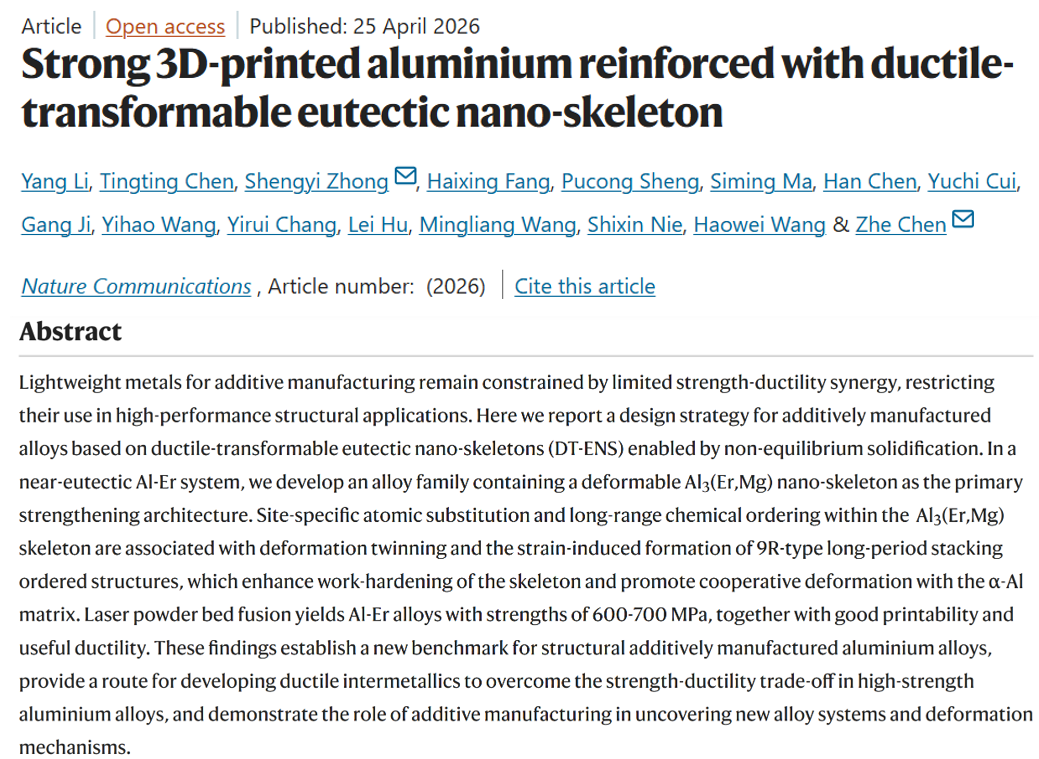
Figure 1: The related work was published in Nature Communications. Image source: Nature Communications article webpage.
Addressing the longstanding challenge of simultaneously achieving strength, ductility, and printability in laser powder bed fusion (LPBF) additively manufactured aluminum alloys, this research proposes a design strategy for high-strength additively manufactured aluminum alloys based on the near-eutectic Al–Er system. The team constructed an Al₃(Er,Mg) eutectic nano-skeleton capable of participating in load-bearing, deformation, and work hardening, providing a new research pathway for the proactive design of high-performance lightweight metallic materials. The work integrates materials informatics, first-principles dopant screening, non-equilibrium solidification microstructure design, synchrotron in situ characterization, and engineering validation, demonstrating the interdisciplinary characteristics of new-material development for complex engineering demands. It also aligns with the institute’s development direction of promoting internationalization, engineering-oriented education, and AI-empowered engineering education.
Research Background
High-performance aluminum alloys are important lightweight materials for aerospace, robotics, low-altitude aircraft, transportation equipment, and high-end industrial structural components. Additive manufacturing provides a new manufacturing approach for complex lightweight structures. However, traditional high-strength aluminum alloys are often constrained by thermal cracking, insufficient microstructural stability, and limited process windows under laser rapid solidification and cyclic thermal stress conditions.
Near-eutectic aluminum alloys exhibit favorable solidification characteristics and are suitable for forming refined microstructures under the rapid solidification conditions of additive manufacturing. However, eutectic intermetallic compounds with high volume fractions are typically brittle, limiting material ductility and service reliability. How to transform eutectic intermetallic compounds from conventional hard reinforcing phases into structural units capable of load-bearing, coordinated deformation, and work hardening constitutes the central scientific question of this study.
To address this issue, the research team combined materials informatics, first-principles calculations, non-equilibrium solidification microstructure design, and multiscale mechanism validation to establish a proactive design framework for near-eutectic high-strength Al–Er alloys tailored for additive manufacturing processes.
Research Innovations
Establishing a Design Route for Additively Manufactured Aluminum Alloys Based on the Near-Eutectic Al–Er System
The team selected the near-eutectic Al–Er system as the basis for alloy design, primarily due to the favorable crystallographic compatibility between Al₃Er and the α-Al matrix, as well as the potential for forming continuous eutectic nano-skeletons within the Al–Er near-eutectic composition range under laser rapid solidification conditions. Through non-equilibrium solidification phase diagrams and rapid-solidification microstructure selection maps, the study clarified the compositional window and microstructural evolution pathway for eutectic skeleton formation under LPBF conditions.
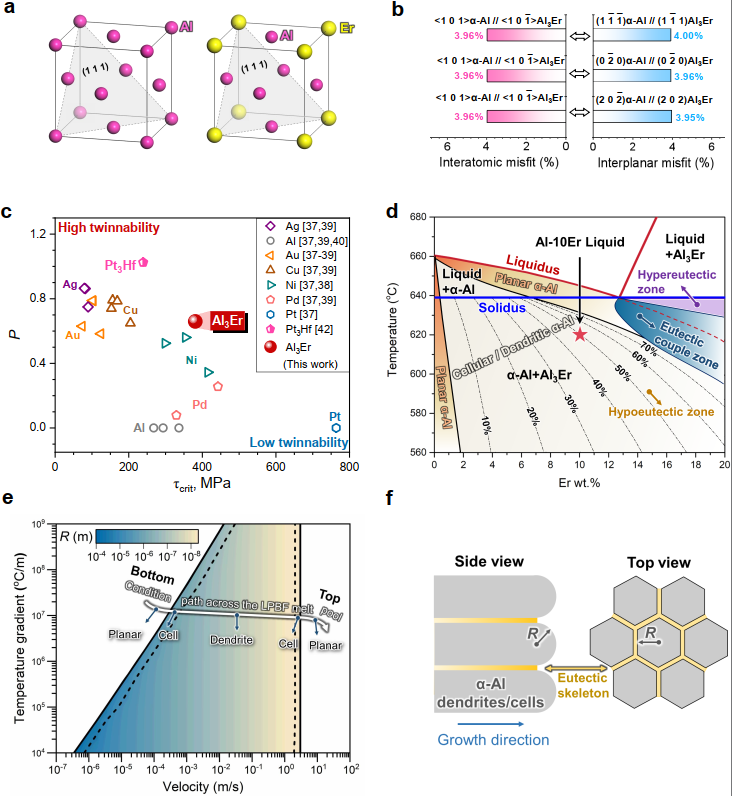
Figure 2: Design strategy for the Al–Er system targeting additive manufacturing. Image source: Li et al., Nature Communications (2026).
Screening Key Dopant Elements Through AI-Assisted Materials Computation
The team conducted first-principles calculations on the Al₃Er phase and systematically evaluated the effects of 25 dopant elements on stacking fault energy, solid-solution energy, and deformation-related energetic parameters. The computational results supported the introduction of Mg as a key regulating element into the Al–Er near-eutectic system. Mg not only helps reduce the stacking fault energy of the Al₃Er phase, but also participates in atomic occupancy and chemical ordering regulation within the Al₃(Er,Mg) eutectic skeleton, providing the atomic-scale foundation for subsequent nanotwinning and 9R structural transformations.
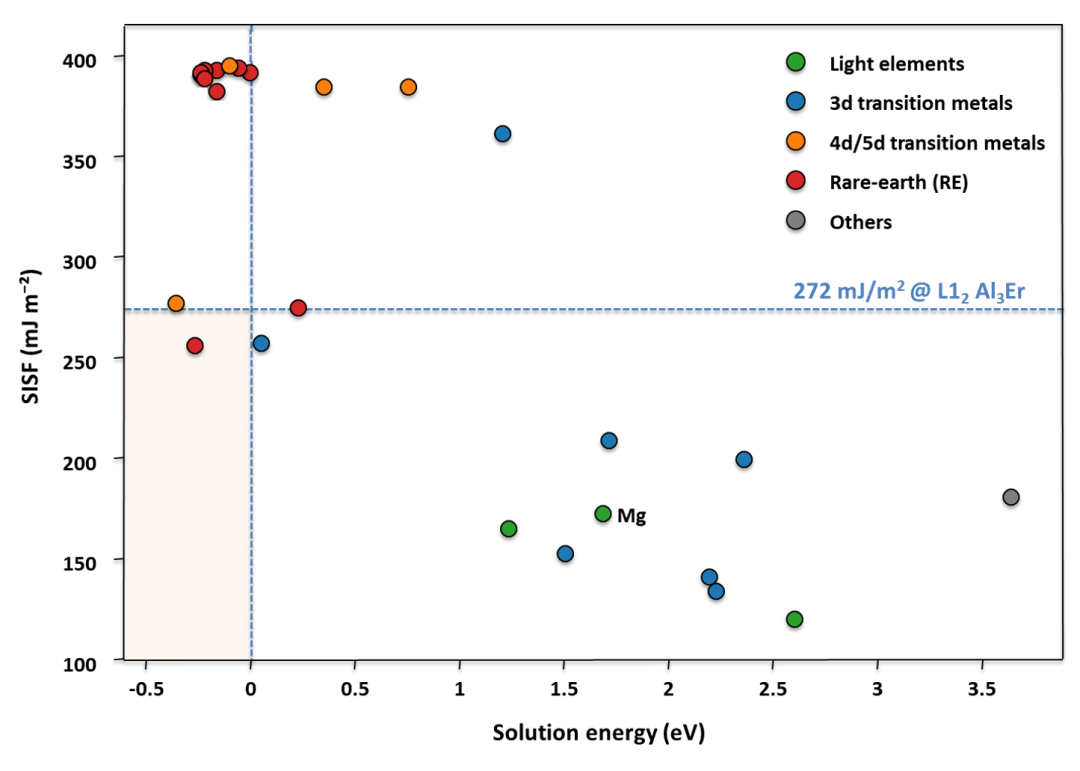
Figure 3: First-principles calculations assisting dopant element screening. Image source: Research team.
Proposing a Design Strategy for a Deformable Eutectic Nano-Skeleton
The study found that the Al₃(Er,Mg) eutectic nano-skeleton in the RAE-series Al–Er–Mg alloys can participate in load-bearing, deformation, and work hardening during tensile deformation. Nanotwins can form within L1₂-Al₃(Er,Mg), while 9R-type long-period stacking transformations can occur in P3m1-Al₃(Er,Mg). This mechanism provides a new microstructural design strategy for achieving synergy between high strength and usable ductility.
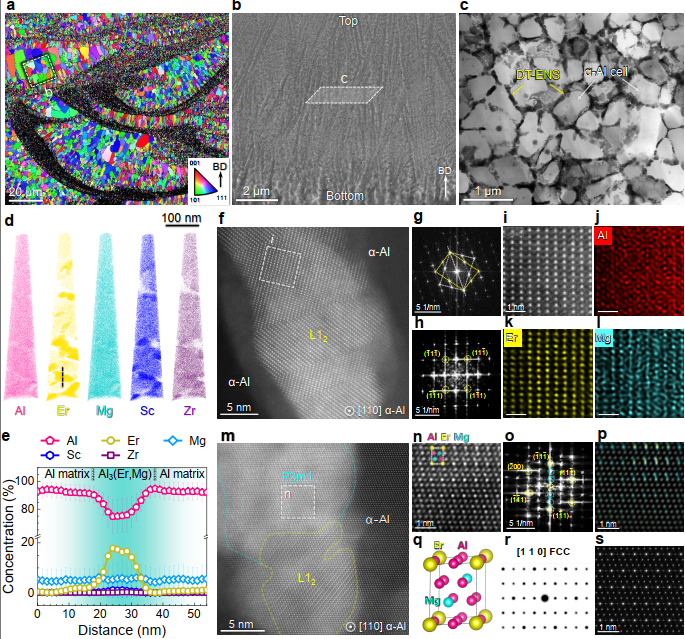
Figure 4: Al₃(Er,Mg) eutectic nano-skeleton formed in the RAE600 alloy and its atomic-scale structural characteristics. Image source: Li et al., Nature Communications (2026).
Revealing the Synergistic Mechanism of Strength and Ductility Through Synchrotron In Situ Experiments
The research team conducted synchrotron in situ tensile X-ray diffraction experiments. The experiments demonstrated that the Al₃(Er,Mg) eutectic nano-skeleton bears substantial loads during deformation and continuously accumulates defects and undergoes work hardening during the plastic deformation stage. Good interfacial compatibility between the α-Al matrix and the eutectic skeleton helps delay local strain concentration. Combined with atomic-scale STEM characterization and theoretical calculations, the study further clarified the fundamental mechanisms enabling the synergy between high strength and usable ductility in this material system.
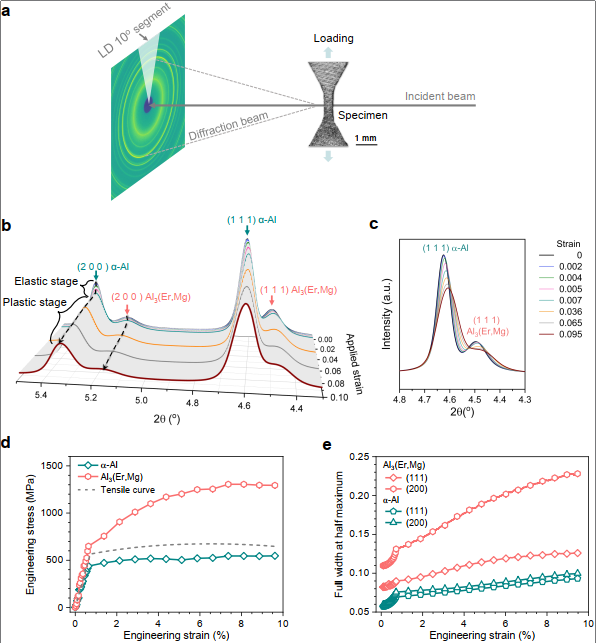
Figure 5: In situ tensile results of heat-treated L-PBF RAE600 alloy monitored by synchrotron X-ray diffraction. Image source: Li et al., Nature Communications (2026).
Advancing Materials from Scientific Design Toward Engineering Validation
Based on the above design strategy, the RAE-series Al–Er alloys achieved strengths of 600–700 MPa while maintaining engineering-grade ductility and favorable printing stability. At present, the related materials have entered engineering stages including powder preparation, printing process development, heat-treatment optimization, and validation of complex components.
During the engineering implementation process, the team collaborated with Acc Material Technology, AVIC, China Aerospace Science and Technology Corporation, and China Aerospace Science and Industry Corporation on powder preparation, process-window development, and validation of complex components, laying the groundwork for future applications of the materials.
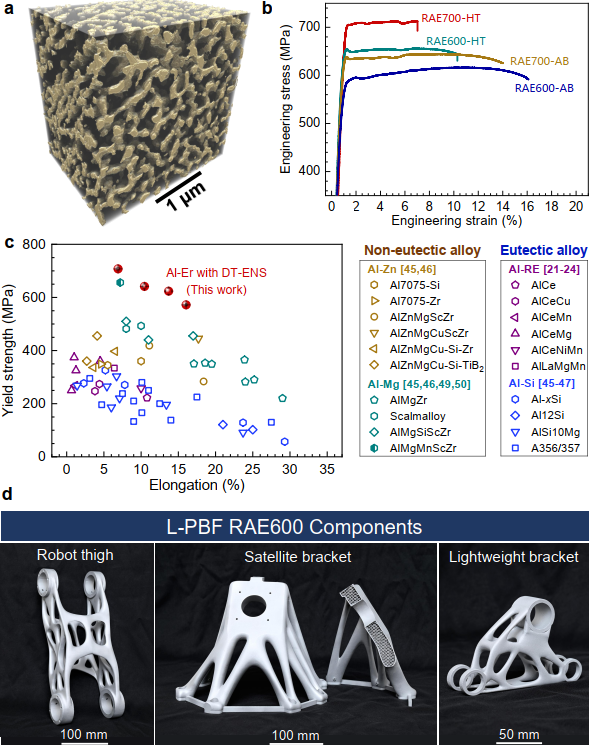
Figure 6: Tensile properties of RAE-series Al–Er alloys and comparison with other additively manufactured aluminum alloys. Image source: Li et al., Nature Communications (2026).
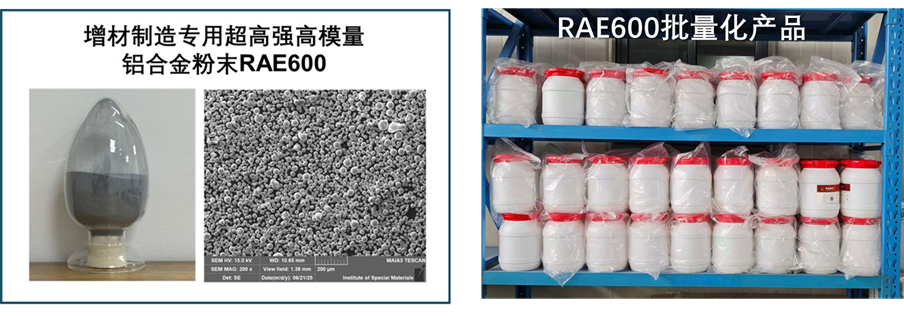
Figure 7: Photographs of RAE600 alloy powders and mass-produced products. Image source: Acc Material Technology.
Team Introduction
The team led by Professor Zhong Shengyi and Associate Researcher Li Yang focuses on new-material design and manufacturing “from atoms to engineering applications.” Their research emphasizes the development of physics-constrained AI, cross-scale advanced characterization, and intelligent experimental methods. Targeting key stages in new-material development—including composition design, microstructure regulation, property prediction, and engineering validation—the team explores a closed-loop R&D model integrating “design–computation–experiment–feedback.”
Relying on platforms such as the State Key Laboratory of Neutron Science and Technology, the team develops advanced neutron-testing technologies and multiscale material characterization methods, establishing nondestructive quantitative characterization capabilities for engineering-component microstructures including residual stress, texture, and nanoscale phases. By integrating AI materials computation, materials genome approaches, and experimental validation, the team supports the development of high-performance structural materials and complex engineering components.
The present study on the RAE-series Al–Er near-eutectic high-strength additively manufactured aluminum alloys represents an important practice in these research directions.
The team’s research also provides authentic scientific research scenarios for SPEIT’s interdisciplinary and engineering-oriented talent cultivation. Focusing on high-performance material design and manufacturing, students and young researchers are able to train in interdisciplinary environments spanning materials science, artificial intelligence, advanced manufacturing, and engineering applications, gradually building systematic understanding from scientific problem identification, AI computational modeling, and experimental validation to engineering application and technology transfer. These research directions will also continue to support the institute’s efforts in advancing AI-empowered engineering education and new engineering disciplines.
ABOUT
Article Title: Strong 3D-printed aluminium reinforced with ductile-transformable eutectic nano-skeleton
Journal: Nature Communications
DOI: 10.1038/s41467-026-72256-4
Full-text Link: https://www.nature.com/articles/s41467-026-72256-4