








SJTU·SPEIT
On the afternoon of June 26, the SJTU Paris Elite Institute of Technology (SPEIT) of Shanghai Jiao Tong University (SJTU) convened its 27th Joint Management Committee Meeting in a hybrid format, combining both online and in-person participation.

The meeting was attended by Ding Kuiling, President of Shanghai Jiao Tong University; Xi Lifeng, Executive Vice President; Liu Weidong, Vice President; Zhang Junliang, Director of the Office of Academic Affairs; Yin Haitao, Director of the Office of International Cooperation and Exchange; and the leadership team of SPEIT. Representatives from the French partner institutions participated online, including Estelle IACONA, President of ENSTA Paris; Christopher CRIPPS, Vice President of École Polytechnique; and Patrick OLIVIER, President of Télécom Paris. Invited guests also included Gu Jianmin, Chief Technology Officer of Valeo China; Yin Yue, Technical Consultant of Dassault Systèmes Greater China; and Alan SEGUR, Attaché for Science, Culture and Education at the Consulate General of France in Shanghai. The meeting was chaired by Liu Weidong
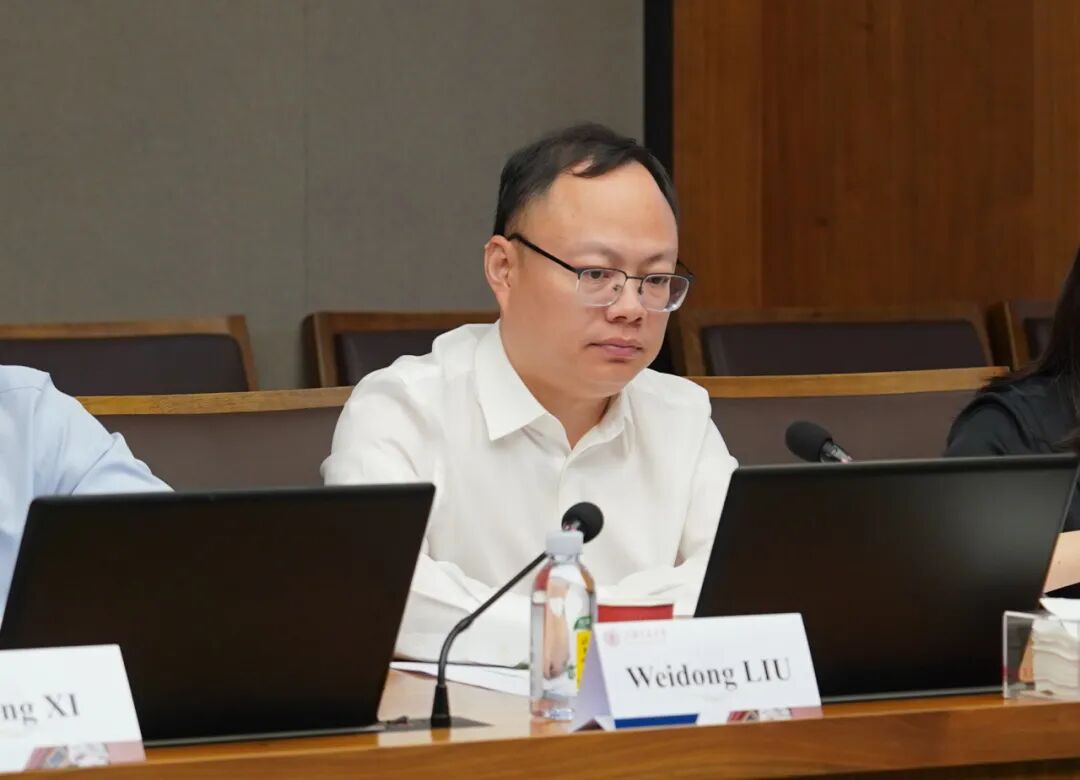

Ding Kuiling delivered the opening remarks. On behalf of Shanghai Jiao Tong University, he warmly welcomed representatives from Chinese and French partner universities as well as industry guests, and expressed his sincere appreciation to the Consulate General of France in Shanghai for its longstanding support. He noted that, as the Institute's highest decision-making body, the Joint Management Committee convenes twice each year to guide the Institute's strategic development and regularly review its educational performance and operational effectiveness. He encouraged all participants to engage in in-depth discussions on key issues, including faculty development, international cooperation, and the deep integration of industry, education, and research, with the aim of contributing valuable insights for the Institute's long-term development.

During the meeting, Xiong Zhenhua, Secretary of the Institute; Chen Cailian, Chinese Dean; Zied MOUMNI, French Dean; and Lü Jiangying, Vice Secretary, each presented thematic reports. They provided a comprehensive overview of the Institute's achievements since the previous Joint Management Committee Meeting in areas including faculty development, quality assurance and educational management reform, graduate employment, international cooperation, and industry-education integration.
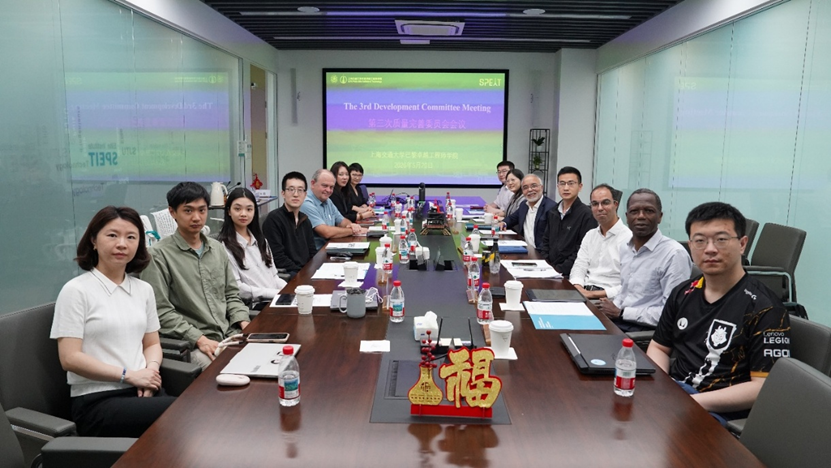
The Institute also announced adjustments to its leadership team. Lü Jiangying was appointed Vice Secretary, responsible for student affairs; Wang Shaobo was appointed Vice Dean, overseeing academic affairs and admissions; and Gong Helin was appointed Director of the Department of Information Engineering.The Institute successfully completed the regular rotation of its international faculty while continuing to recruit outstanding young academics to strengthen its teaching team. Its research capacity has expanded significantly through a dual-track strategy combining the promotion of internal academic leaders with the recruitment of high-level researchers from China and abroad, resulting in a substantial enhancement of its overall research capabilities. Significant progress has also been made in quality management through the comprehensive review and optimization of the entire management process, greatly improving the Institute's refined governance and operational efficiency.
Educational reform has continued to advance steadily. The Institute completed the appointment of the Coordinator for the Information Engineering program, optimized the selection and appointment mechanism for visiting professors, and continuously refined its curriculum. In response to the rapid development of artificial intelligence, new instructional modules on AI tools have been incorporated into the curriculum alongside a comprehensive framework for AI ethics education, preparing a new generation of engineers who possess both strong technical expertise and a solid sense of professional responsibility.

Graduates of the Class of 2026 have demonstrated strong overall competitiveness. Their employment outcomes remain excellent, with diverse career destinations across multiple industries. More than 60% have entered the information and communications technology sector, while others have joined organizations in advanced manufacturing, finance, education, and public administration. An increasing number of graduates have chosen international career opportunities or overseas divisions of central state-owned enterprises. In addition, more than ten graduates have been admitted to doctoral programs at leading universities around the world, including Johns Hopkins University, EPFL, Peking University, and Shanghai Jiao Tong University.
The Institute's international educational environment continues to flourish. The proportion of Chinese students participating in overseas exchange programs has increased year after year, while both the number of incoming international exchange students and students enrolled in dual-degree programs have reached new historical highs. The Institute has continued to organize a wide range of signature activities, including Sino-French cultural salons, academic exchange visits, and joint practical training programs, fostering deep interaction between Chinese and French faculty and students. As a result, the Institute's reputation for international education and its influence across global industries continue to grow steadily.

Earlier in June, Liu Weidong led a delegation to visit the French partner institutions. During the visit, both sides held extensive discussions on expanding channels for cooperation and broadening exchange and mobility programs, further elevating the strategic partnership between the institutions.

Coinciding with the 130th anniversary of Shanghai Jiao Tong University, the Institute successfully hosted the Sino-French Forum on University-Industry Cooperation for Future Engineering Education. During the forum, strategic cooperation memoranda were signed with 13 leading industry enterprises, establishing long-term collaborative mechanisms between the University and industry. The Institute also introduced five new industry co-developed courses, increasing the proportion of such courses from 14.0% to 22.3%, thereby integrating cutting-edge industrial technologies and real-world enterprise projects more extensively into classroom teaching.The Committee also reviewed and approved the execution of the Institute's 2025 financial budget and adopted the proposed 2026 financial budget, providing a solid financial foundation for the Institute's continued development.
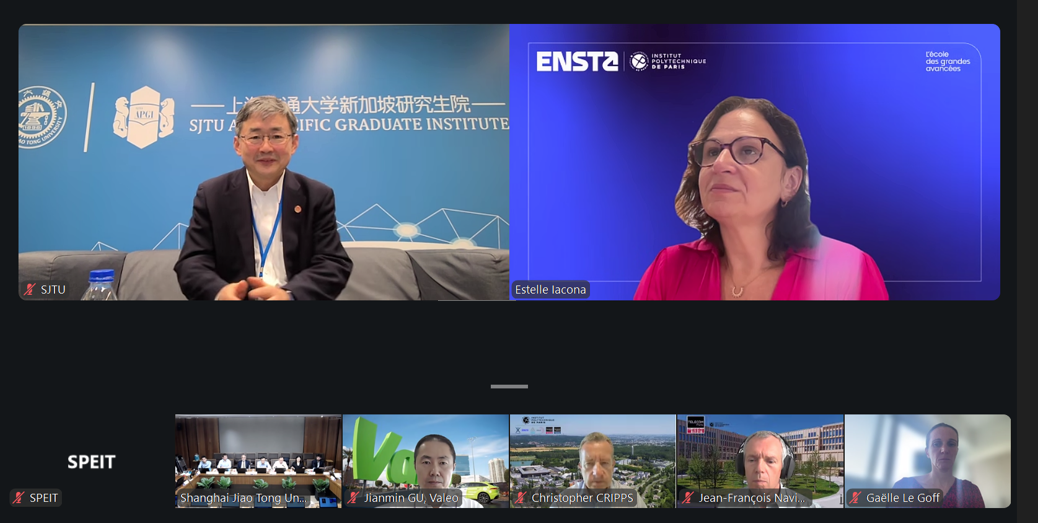
On behalf of the French partners, Estelle IACONA highly commended the Institute's achievements since the previous meeting and expressed her appreciation for the dedication and hard work of all faculty and staff. She particularly praised the continuous growth in the number of international non-degree students and noted that the French partners would further optimize the selection process for dual-degree students. She thanked Shanghai Jiao Tong University for its comprehensive institutional support and acknowledged the sustained contributions of industry partners to the Institute's development. She expressed satisfaction with both student recruitment and the quality assurance system for talent cultivation and looked forward to the completion of the new Sino-French building later this year.

In his concluding remarks, Xi Lifeng expressed his sincere gratitude to the French partner institutions for their longstanding collaboration. He stated that the next phase of cooperation would focus on further removing barriers to resource sharing between China and France while comprehensively upgrading collaboration in education, scientific research, and talent exchange. Through the Institute's high-quality development, both sides will continue to contribute to elevating the China-France Comprehensive Strategic Partnership to new heights. He also formally invited representatives of all French partner institutions to visit Shanghai Jiao Tong University this December to witness the inauguration of the new Sino-French building and jointly discuss new strategies for the Institute's high-quality development.
The meeting concluded successfully in a warm and friendly atmosphere. Taking this meeting as a new starting point, the SJTU Paris Elite Institute of Technology will continue to deepen comprehensive Sino-French strategic cooperation, remain at the forefront of global engineering education reform, broaden the dimensions of internationally oriented talent cultivation, strengthen innovative practices in industry-education integration, and further consolidate its position as a leading model of Sino-French cooperative education in China. The Institute remains committed to cultivating outstanding interdisciplinary engineers with a global vision and world-class engineering competence.