








On July 23, 2026, in the local time, the quadrennial International Congress of Mathematicians opened in Philadelphia, United States. Chinese mathematician Wang Hong was awarded the 2026 Fields Medal, marking a historic breakthrough for mathematics in China.
A review of Fields Medalist Wang Hong’s academic path brings into focus three formative years of study in France, from 2011 to 2014. In 2014, she earned an engineering degree from École Polytechnique and a master’s degree in mathematics from Paris-Sud University (now Université Paris-Saclay).
École Polytechnique and Paris-Saclay University are respectively the French partner institution and in-depth collaborative partner of the SJTU Paris Elite Institute of Engineering.


▲On 27 May 2025, in Paris, France, faculty and students of SPEIT attended an academic lecture delivered by Professor Wang Hong. After the lecture, Professor Wang Hong had an amicable exchange them.
Founded in 2012, SPEIT is a Sino-French institute jointly established by SJTU and four leading French engineering schools, including École Polytechnique. Since its establishment, SPEIT has sent nearly 150 students to École Polytechnique to pursue an engineering degree or semester-exchange; in turn, École Polytechnique has sent 40 students to SPEIT on exchange, while its visiting faculty have made 147 teaching visits.
Through its Sino-French cooperative education model, SPEIT has developed a sustainable and extensive partnership with l’Université Paris-Saclay. Over the past three years, it has sent 27 students to study at l’Université Paris-Saclay and welcomed 11 international students from the university.

In the French higher education system, an engineer (ingénieur) is not simply a practitioner working in engineering. The title of “ingénieur diplômé” is regulated by law in France, notably under Article L. 642-2 and subsequent provisions of the French Education Code (Code de l’éducation), and denotes a legally protected academic qualification awarded by a program accredited by France’s Commission des titres d’ingénieur (CTI) and rooted in the elite grande école system.
France’s engineering education system emerged during the Industrial Revolution, when strong demand for technological innovation gave rise to a lasting and rigorous system of education in foundational disciplines. Engineering education aims to develop people with a solid grounding in mathematics and science who can understand complex problems, continue to explore across fields, exercise judgment, and drive innovation.
From Beijing to Paris, from an engineering education system to the cutting-edge frontiers of pure mathematics research, Wang Hong’s journey once again demonstrates the breadth of French engineering education.
An Exploration into SPEIT
As a Sino-French institute, SPEIT draws on and integrates the French engineering education model on strong foundations and broad-based training. It has a two-year foundational stage followed by a four-and-a-half-year engineering specialization stage. Within this system, students build strong foundations in mathematics and physics before gradually exploring specialist fields, and may continue their studies at French institutions through double-degree and semester-exchange programs.
In this way, an international pathway linking Chinese and French engineering education, the basic sciences, and frontier research continues to expand.

▲Eight SPEIT Class of 2019 students completed their engineering studies at École Polytechnique. Pictured at the graduation hat ceremony (Li Yuda, fourth from right).
Li Yuda, a 2026 master’s graduate in Electronic and Information Engineering from SPEIT, is now pursuing a master’s degree in fundamental mathematics at Université Paris-Saclay. He plans to begin doctoral studies in mathematics in September 2026. Supported by an AMX doctoral scholarship awarded by the École Polytechnique Alumni Foundation, his doctoral research focuses on “Quantization of (E_n)-Enveloping Algebras and Applications in Mathematical Physics”.
In his third undergraduate year, Li Yuda entered a two-and-a-half-year double-degree program at École Polytechnique.
He recalled: “I began my training in the French engineering education system at SPEIT. Those two years showed me how deeply French mathematics education values logical rigor and the ideas underlying mathematical proofs, and they gradually sparked my strong interest in mathematics.”

▲Li Yuda (1st from the left in the back row) represented École Polytechnique in the French National Badminton Championship.
École Polytechnique’s open and flexible academic environment also gave him ample room to explore. “The first two years of the engineering program are non-specialized, with students choosing a specific field only in the third year; this allowed me to explore a wide range of disciplines and interests before firmly committing myself to mathematics.”
A particularly profound influence on Li Yuda was Professor Grégory Ginot’s algebraic topology course at École Polytechnique. “He used geometric representations to illuminate abstract theories, helping me realize that I understand complex mathematical structures especially well through intuition and sparking my strong interest in algebraic topology.”
To further strengthen his research foundations, Li Yuda went on to pursue a master’s degree in fundamental mathematics at Université Paris-Saclay after completing his studies at SPEIT. There, he is taking advanced courses in homotopy theory and systematically studying modern homotopy theory, higher category theory, and operad theory in preparation for his doctoral research.

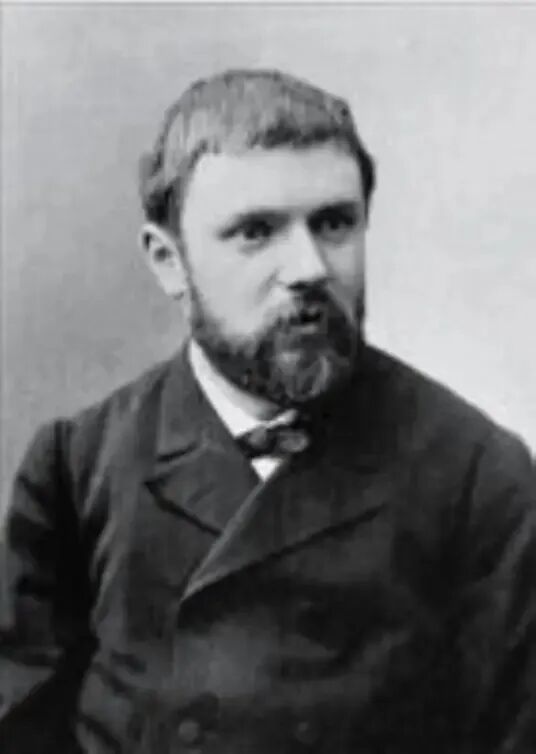

▲From left to right: 1. Augustin-Louis Cauchy (entered in 1805), one of the founders of modern mathematical analysis and complex analysis. 2. Henri Poincaré (entered in 1873), the originator of algebraic topology and the theory of qualitative differential equations. 3. Benoît Mandelbrot (entered in 1944), founder of fractal geometry and recipient of the Wolf Prize in Mathematics in 1993.
In fact, France’s engineering education system has produced outstanding figures throughout its history. Engineering schools, especially École Polytechnique, count among their alumni many names now widely recognized across the contemporary scientific world. École Polytechnique alone offers numerous examples (As shown in the figure above).

▲Chen Yiming and his classmates carried out AI-related community activities at Station F in Paris, Europe’s largest startup incubator.
Chen Yiming, a student from the Class of 2021 currently pursuing a double degree at École Polytechnique, has chosen a different path.
Chen Yiming graduated from the Tianjin Foreign Languages School Affiliated to Tianjin Foreign Studies University and has long had a strong interest in mathematics. After arriving at École Polytechnique in September 2024, he decided to specialize in mathematics and artificial intelligence.
“French-style education places great emphasis on fundamental principles. In applied mathematics, courses do not stop at teaching students how to use models; they require a genuine understanding of the mathematical logic behind probability, statistics, and optimization, making them both deep and demanding,” Chen Yiming said.
While in France, he chose to take courses in mathematical probability, advanced mathematical statistics, optimization and optimal control, stochastic processes, uncertainty analysis, Markov chain Monte Carlo methods, and Bayesian inference, further strengthening his foundations in applied mathematics, statistics, and artificial intelligence.
While studying at SPEIT, he had already joined an SJTU laboratory specializing in artificial intelligence for his first exposure to research. After arriving in France, he continued to participate in academic activities and community initiatives in artificial intelligence, and his exchanges with French researchers and industry professionals brought into focus the differences between Chinese and French approaches to education.
“AI labs in France show a clear preference for mathematics. Many of the questions I have been asked involved mathematics. I have found that French students stand out for their mathematical maturity, whereas Chinese students have an advantage in engineering implementation and rapid deployment. The two groups focus on different things; studying in France gives us a valuable opportunity to learn from one another’s strengths and test our ideas through exchange.”
Alongside coursework and academic activities, Chen Yiming also began exploring industry in an international and cross-cultural setting during his time in France.
He joined BNP Paribas’s Global Markets division for a machine-learning project on high-frequency forecasting of options volatility surfaces. His teammates come from the United Kingdom, France, India, and Morocco; he finds daily collaboration in this multilingual and multicultural environment deeply engaging.
“My own field is inherently interdisciplinary. Working with very large, high-frequency datasets requires an understanding of computing, input/output systems, and distributed computing. Machine learning calls for expertise in statistics and artificial intelligence. Option pricing, meanwhile, requires a foundation in finance and stochastic mathematics. Knowledge that once seemed scattered across separate courses ultimately comes together in a real-world project.”
Both began at SPEIT and then continued their studies at École Polytechnique: Li Yuda has moved into fundamental mathematics, while Chen Yiming is exploring the intersections of applied mathematics, artificial intelligence, and financial engineering. Other students have pursued such diverse fields as embodied intelligence, chip design, quantitative investing, scientific research and academia, and international governance.
May every student find a field to which they are truly willing to devote themselves for the long term, and reach their own excellence, one step at a time!